Nicolas Klotz
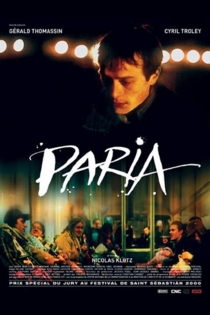
2021Paria
Nicolas Klotz
Cyril Troley, Gérald Thomassin
First part of a "trilogy of modern times" (the second one is La Blessure, and third - La question humaine). Paria follows the path of two characters, Momo and Victor. Momo –remarkably played by Gérald Thomassin– lives in the streets, while Victor, on the edge of poverty, loses his apartment when he loses his job. Their destinies will come across during the night of the “millennium” which will be celebrated in a social pick-up bus.
Paria
La blessure
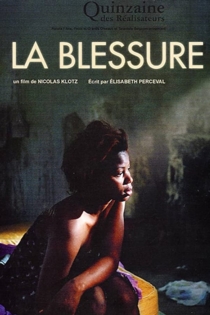
Nicolas Klotz
Noëlla Mossaba, Adama Doumbia
Blandine arrives at the Charles de Gaulle Airport, seeking a reunion with her husband Papi in Paris. Despite articulate claims for asylum, she is held in a cramped cell along with a number of fellow Africans, humiliated, mistreated and told that they can expect immediate deportation. Papi enquires of her whereabouts at Arrivals, and is met with disinterested, misleading responses. When Blandine is hurt in a skirmish on the runway as the authorities try and force her out of the country, circumstances and a sympathetic employee of the Ministry of Foreign Affairs save her from expulsion. She is finally reunited with Papi in a communal squat, its inhabitants sharing harrowing stories of their time in France. With work, money and food scarce, and her confidence shaken by her less than warm welcome to the country, Blandine cannot find the enthusiasm to leave her damp mattress.
The Wound
Nous disons révolution
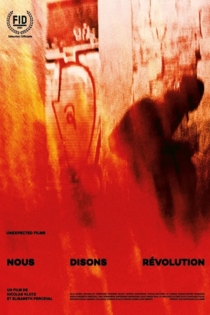
Nicolas Klotz, Elisabeth Perceval
Men and women are dancing feverishly for a long time. The dance of bodies turns into a filmic trance, fleeing turns into running away, with braided motifs that get revived with every race. The men who don’t dance talk, recite, tell their own stories for and with the filmmakers. And be it through dancing or talking, it is by sharing work space and time, by making a film together, as a community, and by lovingly giving in to sharing, that the film operates politically. It even makes a processional samba in the streets of Sao Paulo look like a show of inalienable collective power. Carried away by this power, the film itself then seems to run away, to overrun its own limits. Somewhere between fable and document, improvisation and composition, anger and joy, all frontiers are burning. (Cyril Neyrat - FID 2021)
Let’s Say Revolution
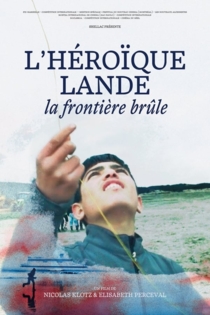
L'héroïque lande - La frontière brûle
Nicolas Klotz, Elisabeth Perceval
A growing city, where nearly 7,800 people lived, will be destroyed by 50% in February 2016. How will the 4,000 migrants expelled from the South zone reborn from their ashes in the northern zone. Before the state decided to annihilate the entire territory in October 2016 and to disperse its 11,000 inhabitants, to the four corners of France.
The Wild Frontier

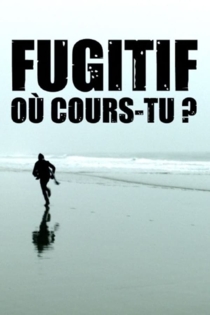
Fugitif, où cours-tu ?
Nicolas Klotz, Elisabeth Perceval
Life for refugees and migrants stuck at Calais: Filmed amidst the camps, the beaches, the sea and the sky, impressions of the lived experiences of these people wavering between despair and hope.
Fugitive, Where Are You Running to?
The Bengali night
Nicolas Klotz
John Hurt, Hugh Grant
Allan is an engineer working in 1930s Calcutta. He is invited to stay with the family of his boss, Narendra Sen which includes his wife, Indira and daughter Gayatri. Gayatri and Allan become romantically involved leading to tragedy.
The Bengali Night


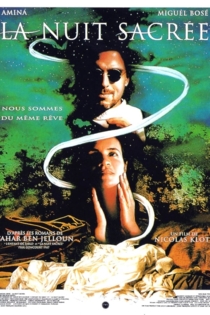
La nuit sacrée
Nicolas Klotz
Amina Annabi, Miguel Bosé
A rich Moroccan who belongs to the better circles has seven daughters. Whatever happens, the eighth offspring must be a son. It is a girl again, but she is given a male name, Ahmed and grows up like a boy. When Ahmed is 21, he is in an identity crisis: he wants to shave, leave a mustache and take his niece to wife. In the meantime, Ahmed's father is dying and wants to sail to heaven. He calls to Ahmed and calls her a female name Zahra and gives her freedom so that she can go out.
La nuit sacrée
Saxifrages, quatre nuits blanches
Nicolas Klotz, Elisabeth Perceval
« In the shadows of Low Life, a secret ceremony dedicated to thirteen guardians of humanity’s common treasures, love and resistance, youth and poetry, equality and difference, insurrection and revolution. Saxifrages … These rootless plants’ windblown destiny is a soft perseverance doubled by an imperceptible intransigence, which, in time, imposes on the hardness of stones a patience that can break them. » – Saad Chakali
Saxifrages, Four White Nights

Mademoiselle Julie
Frédéric Fisbach, Nicolas Klotz
Juliette Binoche, Nicolas Bouchaud
Mademoiselle Julie is a naturalistic play written in 1888 by August Strindberg. It is set on Midsummer's Eve on the estate of a Count. The young woman of the title is drawn to a senior servant, a valet named Jean (Nicolas Bouchaud), who is particularly well-traveled, well-mannered and well-read. The action takes place in the kitchen of Mademoiselle Julie's father's manor, where Jean's fiancée, a servant named Christine (Bénédicte Cerutti), cooks and sometimes sleeps while Jean and Miss Julie talk. On this night the relationship between Miss Julie and Jean escalates rapidly to feelings of love and is subsequently consummated. Over the course of the play Miss Julie and Jean battle until Jean convinces her that the only way to escape her predicament is to commit suicide.
Mademoiselle Julie
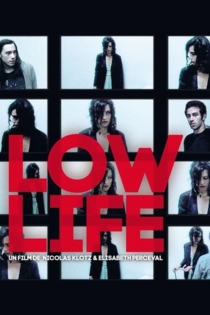
Low Life
Nicolas Klotz, Elisabeth Perceval
Camille Rutherford, Arash Naiman
A group of young people are organizing. One night, they face the police who came to evacuate an African squat. Carmen meets Hussain, a young afghan poet. Crazy in love, they don’t leave each other. But a curse hangs over the city, papers are carrying death, bodies are falling. Panicked at the idea that he could get arrested, Carmen forbids him to go out, and locks herself with him. Gradually, Hussain get the feeling that she is watching him…
Low Life