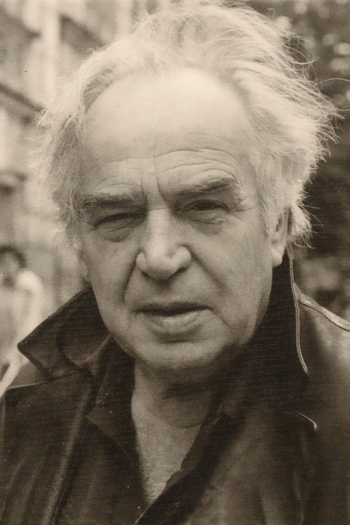
Ota Sklenčka
1919 - 1993He graduated from grammar school in 1939, after less than a semester of medical studies, when the Nazis closed down Czech universities, he took the stage. He started acting with Horror at the Horácký Theater from where he moved to the Tábor theater, later in 1951 he also played in Prague at the Theater in Vinohrady, then under the title Theater of the Czechoslovak Army, respectively. since September 1955 the Central Theater of the Czechoslovak Army. From there he moved to the Municipal Theaters of Prague where he played from 1961 to 1975 and his acting career continued until 1980 in the Zdeněk Nejedlý Realistic Theater in Prague's Smíchov (nowadays the Švanda Theater is located here). From this theater in 1989 he was back to Vinohrady, the new director of the Vinohrady Theater, František Laurin. Here he remained practically until his death in 1993.
From 1961 he also worked as a theater pedagogue at the Prague DAMU. His students included, for example, František Němec. Among his hobbies was artistic activity, he was a relatively good painter and a sports fisherman.
He also worked on radio, in film and was often cast on television, both in serials and television productions.
From Wikipedia, the free encyclopedia

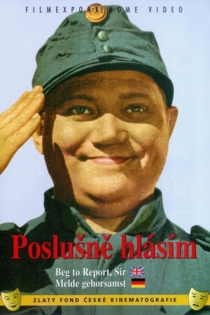
Poslušně hlásím
Karel Steklý
Rudolf Hrušínský, Svatopluk Beneš
A comedy based on the novel of Jaroslav Hašek's The Good Soldier Svejk happens during the World War I. I Dutifully Report: In the introduction to the second part of the film adaptation of Hašek's novel The Good Soldier Švějk presents his main character Josef Švejk. With the distinctive traditional Czech cartoon character of a soldier Svejk, this time you meet on the way to the front and eventually right in the firing line. You can look at his famous train events, and also probably the most famous episode of the novel, Švejk's Budějovice anabasis. Don't miss the scene with the secretly bought cognac, the episode with Svejk as a fake Russian prisoner of war, including the court scene, and the scene in which lieutenant Dub is caught in a brothel. Despite the criticism, Steklý's adaptation is undoubtedly the most famous and memorable at present.
I Dutifully Report
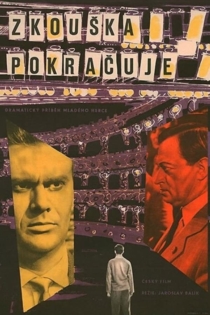
Zkouška pokračuje
Jaroslav Balík
Ivo Palec, Miriam Hynková
Еще в молодости актер Франтишек Лукавец и его преподаватель Владимир Тума стали врагами. Франтишек настоял на том, чтобы Туму как реакционера и враждебно относящегося к новой власти уволили из училища. Прошло много лет, и вот они вновь встретились на сцене одного театра. Франтишеку поручена роль Юлиуса Фучика, Тума в этом же спектакле играет роль гестаповца. По ходу действия гестаповец бьет Фучика. Воспользовавшись случаем, Тума на генеральной репетиции по настоящему избивает своего давнего врага. По лицу Франтишека течет кровь, но он все равно будет играть. Репетиция продолжается...
Zkouška pokračuje
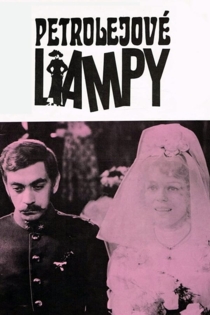
Oil Lamps
Juraj Herz
Iva Janžurová, Petr Čepek
In 1900, Stepha, the vivacious 30 year old daughter of a wealthy couple, agrees to marry her cousin Paul, who has accumulated large debts as an Austrian army officer. Paul refuses to work or to consummate the marriage, and then his health steadily declines.
Oil Lamps
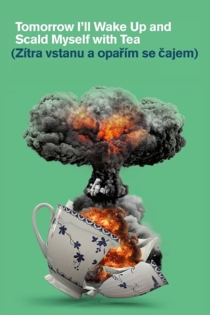
Tomorrow I'll Wake Up and Scald Myself with Tea
Jindřich Polák
Petr Kostka, Jiří Sovák
Former Nazi Klaus Abard survives to the 1990s by taking anti-ageing pills. He plans to use a time travel trip to return to Germany in 1944 and present Hitler with a hydrogen bomb, so that he can win the war. Unfortunately the pilot, woman-chasing Karel Bures, dies on the morning of the trip and his earnest twin brother Jan impersonates him, without knowing about the plot. The plot goes wrong when they lose the bomb and land near Hitler's bunker in 1941, at a time that the Nazis sense victory. Bures, with two of the plotters, escape capture by the Nazis and make it back to the time machine. Bures programs the machine to return one day before they left, because he figures he can then save his brother and foil the plot.
Tomorrow I'll Wake Up and Scald Myself with Tea