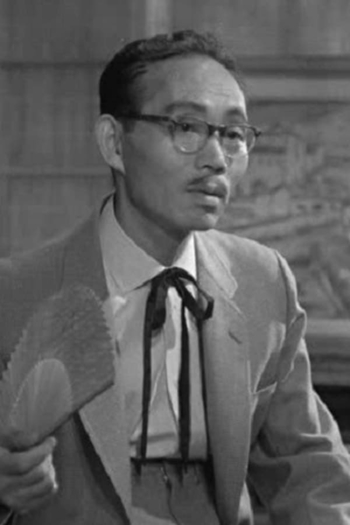
Masao Oda
1908 - 1973
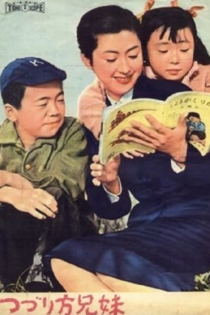
つづり方兄妹
Seiji Hisamatsu
Takao Zushi, Masao Oda
Трогательная история о маленьком Футяне и его сестрёнке Матико. Родители ребят очень бедны, но дети не унывают — они вместе бегают в школу и находят много интересного в жизни. Дети любят литературу и хорошо пишут сочинения. Услышав, что объявлен всемирный конкурс на лучшее сочинение, они решают принять в нём участие и пишут сочинение о том, что их школу хотят снести, а на её месте хотят построить военный завод, о том, как трудно живётся их родителям, как они бедны, но никогда не теряют бодрости духа и надежды. Сочинение ушло в Москву, и ребята с нетерпением ожидают решения. Но Футян не дождался ответа, он простудился и тяжело заболел. А так как на его лечение не было денег, маленький Футян умер, а вскоре пришёл и ответ — сочинению брата и сестры присуждена первая премия.
The Child Writers
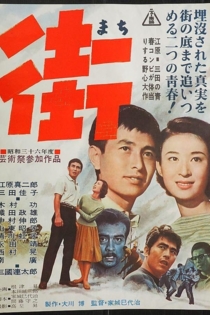
真昼の罠
Mitsuo Yagi
Isao Sasaki, Shima Iwashita
On his way to Tokyo one night, a truck driver picks up a country girl and has his way with her amidst a forest. A few days later he loses his job after a run-in with some punks, but is offered a job by a gangster impressed by his fighting skills. He tries to make amends with the girl he ravished, but becomes caught up in the ways of the underworld...
Mahiru no wana


When a Woman Ascends the Stairs
Mikio Naruse
Hideko Takamine, Masayuki Mori
Keiko, whom everyone calls Mama, narrates her story: she's a hostess on the Ginza, 30, a widow. She describes life's vicious cycle: acting cheerful around drunks, dressing and living well to convey confidence, needing money for these expenses and for her demanding mother and brother, and knowing she's growing older. She's of an age when she must choose: to seek marriage (difficult given her tarnished occupation), to be a kept woman, or to borrow money to buy a bar of her own. Each route has dangers, including investors demanding a return on their loans. Keiko has a quiet dignity that attracts men, but are they what they seem? Does she actually have choices?
When a Woman Ascends the Stairs


Nippon no obaachan
Tadashi Imai
Chôchô Miyako, Tanie Kitabayashi
Two obaachans become fast friends listening to music in front of a record store. They both boast about their loving sons but in reality, one had just escaped a retirement home and the other was looking for an escape from her son and daughter-in-law. With nowhere to go, the two wander around, befriending a cosmetics salesman and a kind waitress who give them beer. This biting social satire starring two memorable grandmothers, scripted by Yôko Mizuki, picked up on Japan’s aging population problem far ahead of its time.
Nippon no obaachan

A Wanderer's Notebook
Mikio Naruse
Hideko Takamine, Akira Takarada
Considered one of the finest late Naruses and a model of film biography, A Wanderer’s Notebook features remarkable performances by Hideko Takamine – Phillip Lopate calls it “probably her greatest performance” – and Kinuyo Tanaka as mother and daughter living from hand to mouth in Twenties Tokyo. Based on the life and career of Fumiko Hayashi, the novelist whose work Naruse adapted to the screen several times, A Wanderer’s Notebook traces her bitter struggle for literary recognition in the first half of the twentieth century – her affairs with feckless men, the jobs she took to survive (peddler, waitress, bar maid), and her arduous, often humiliating attempts to get published in a male-dominated culture.
A Wanderer's Notebook
The Lost Alibi
Hiromichi Horikawa
Keiju Kobayashi, Chisako Hara
Suspense drama about a married salaryman whose affair with one of his co-workers is compromised when, returning from a clandestine meeting with his lover, he runs into a neighbor who is later accused of murder. Questioned by police about the neighbor, and blackmailed by his lover's neighbor, the salaryman's lies lead him on a path to destruction.
The Lost Alibi

ちいさこべ
Tomotaka Tasaka
Kinnosuke Nakamura, Chiemi Eri
A carpenter, Shigetsugu, learns a lesson of love and humanity from five orphaned children and an affectionate woman named Oritsu. It's a winning combination of drama and humor. The warm friendship that grows between the carpenter, the woman and the children making this into a true masterpiece.
A Carpenter and Children

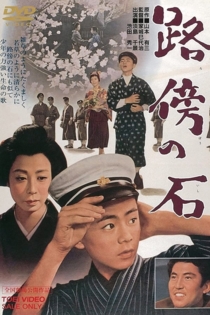
路傍の石
Miyoji Ieki
Chikage Awashima, Katsuo Nakamura
The Wayside Pebble is an effective drama about the hardships of a childhood spent with a brusque, cold-hearted father and a submissive mother. The year is 1910 and the place is a small Japanese village. Goichi is suffering because he wants to go to school, but his family is too poor to afford that luxury. Even when a kind friend agrees to help out, Goichi's father refuses to give in to his son's request for an education. Instead, he sends Goichi off to work as an indentured servant for a cold-hearted merchant and his family. As tragedy strikes and the suffering of the young boy increases, he begins to look for some way out of his bleak situation.
Roadside Stone
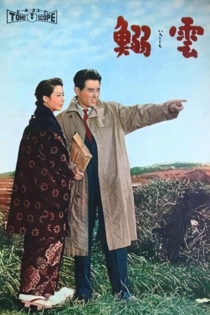
鰯雲
Mikio Naruse
Chikage Awashima, Yôko Tsukasa
A war widow with a young boy manages a farm with her bossy mother-in-law. When a reporter comes to interview her, the two begin an affair. He turns out to be married and won't leave his wife. Her older brother tries to marry off his children and hang on to/ extend his farm through an advantageous marriage in the face of threatened land confiscation and the desire of his children to get comfortable urban jobs instead of the backbreaking work in the paddy fields under parental control.
Summer Clouds