Vlado Novak
2021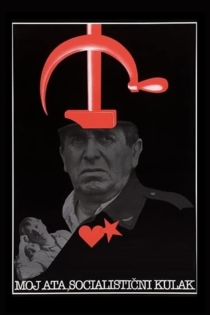
Nekdo drug
Boštjan Vrhovec
Marko Mlačnik, Maja Boh
By a twist of fate, Damjan is mistaken for a murderer who was prowling the streets of Ljubljana in the same neighbourhood. Because of his naive, friendly approach and helpfulness, his wife walks out on him and the police have doubts about his sanity. Is Damjan really losing his memory like his father did before him? And does purity of mind and spirit necessarily lead to a person's downfall? Will Damjan, who is mysteriously attracted and connected to the cinema and who finds himself drawn into a case of mistaken identity (just like in the movies) succeed in setting his life in order in spite of the mix-up and in finding the right companion for himself?
Someone Else

Primer Feliks Langus ali Kako ujeti svobodo
Anton Tomašič
Boris Cavazza, Vlado Novak
Felix Langus is increasingly obsessed with the idea of communicating with supernatural forces, which warn him of the great peril of danger. Attacks of obsession are triggered by aggressive media, which are constantly challenged by dangerous information in a graduated rhythm. At his job as a driver, he has more and more problems. He's moved to an undemanding workplace, but his obsession proves to be dangerous even there, which leads him to unpredictable and grotesquely funny complications. Together with his psychotherapist, he can not escape a common fate...
The Case of Felix Langus or How to Seize Freedom
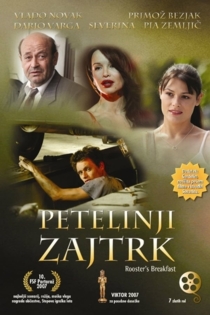
Petelinji zajtrk
Marko Naberšnik
Primož Bezjak, Vlado Novak
After being fired, a young car mechanic Đuro gets recommendation to look for another job in a remote village. His new boss is warm, old fashioned and naive - completely opposite from the world he's coming from. The peaceful atmosphere is shaken when Đuro falls for a regular customer's wife.
Rooster's Breakfast
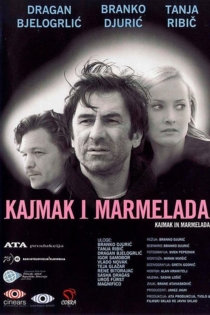
Kajmak in marmelada
Branko Đurić
Tanja Ribič, Branko Đurić
A story about a couple from the bottom of the social ladder, about smuggling refugees across borders and other 'suspect' things- it is, first and foremost, an attempt to tell a story about the worst in people, wherever they may be coming from.
Cheese and Jam
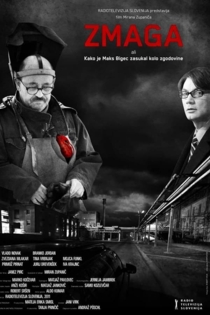
Zmaga ali kako je Maks Bigec zasukal kolo zgodovine
Miran Zupanič
Vlado Novak, Branko Jordan
Worker Maks Bigec decides to take things in his own hands when he hears that his factory will be closed. He takes the factory director as a hostage and demands that the state should reopen the factory.
Max's Victory
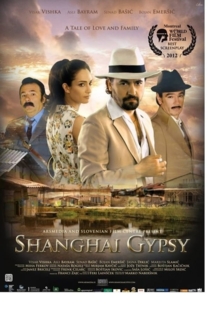
Shanghai Gypsy
Marko Naberšnik
Visar Vishka, Asli Bayram
The main protagonists of the film are members of the gypsy family Mirga. Lutvija Belmondo Mirga narrates a story about four generations. Belmondo is the central character of the film, a gypsy king, who decided to establish his own gypsy village. He names it Shanghai. Belmondo makes a living smuggling and his power and influence grow big. He even gets the local police and politics on his side and that helps him to become untouchable for law. But with the downfall of Yugoslavia, smuggling of goods is replaced by smuggling of the arms. Though lucrative the business starts to threaten Belmondo’s personal life and he finds himself at the crossroads. Will he protect his own family or is he going to sacrifice his personal happiness for business ambitions?
Shanghai Gypsy
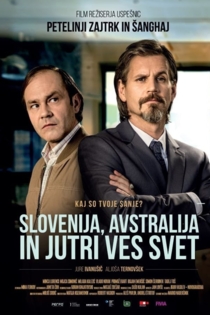
Slovenija, Avstralija in jutri ves svet
Marko Naberšnik
Jure Ivanušič, Minca Lorenci
Slovenia, Australia and Tomorrow the World is a drama film with elements of comedy. The central character Boris works as a machinery maintenance man in a factory, hoping that his work and efforts will be awarded in the future. And indeed, he is given an opportunity by Cosmica, a company providing door-to-door sales and counselling services as well as investment in securities.
Slovenia, Australia and Tomorrow the World
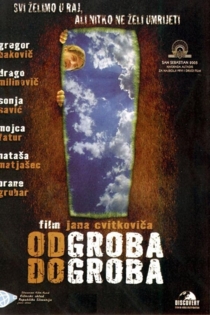
Odgrobadogroba
Jan Cvitkovič
Gregor Bakovič, Brane Gruber
Pero is a professional funeral speaker in a small Slovenian town. His unique gift is to make every funeral that extra bit special. Pero just can't help turning his eulogies into witty personal confessions that bring the grieving crowd to tears for all the wrong reasons.
Gravehopping
Zvenenje v glavi
Andrej Košak
Jernej Šugman, Ksenija Mišič
In Yugoslavia's Livada prison in 1970, inmates led by Keber convince reluctant authorities to let them watch the televised Olympic final basketball game between the home country and the U.S., but taunting guards interrupt the viewing and prod the prisoners to the point of a riot. After a period of a kind of blissful anarchy where the inmates taste freedom, Keber enlists the house "intellectual" Mrak to devise a system of prisoner self-government aimed at forcing reforms on the state.
Headnoise
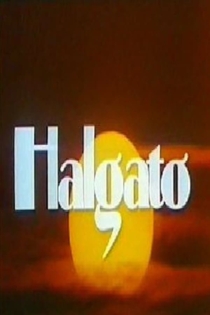
Stekle lisice
Boris Jurjaševič
Jure Ivanušič, Iva Krajnc Bagola
Lovro, a rocker from Pohorje, Džon to his friends, a bachelor in his late thirties, has become victim to modern business machinations: after he failed to get his papers in order in time, the land that had been his family’s property for generations came in the possession of the greedy mayor Fras. However, being short-tempered and as a hunter also a skilled shooter, Džon takes justice into his own hands. Assisted by young journalist Alja he exposes Fras and his helpers.
Sly Foxes
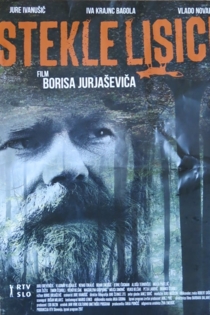
Kavarna Astoria
Jože Pogačnik
Janez Hočevar, Lidija Kozlovič
The city of Maribor before the Second World War, and Maribor after its liberation mark the period in which the film Cafe Astoria is set. The story relates with a gentle melancholy and a slight irony the lives of a middle-class family: the cafe owner, his wife and their son. Through their individual destinies we become acquainted with the social and historical background of a by-gone era; the social and national differences of pre-war Maribor, divisions among the wealthy and poor, and nationally minded Slovenes and fanatic Germanophils. The first year after the war introduced the absurd characteristic cruel measures of the so-called revolutionary social transformations in which calamity and coincidence intervene, resulting in events of comic nature, of course, as seen from a safe distance of fifty years.
Café Astoria
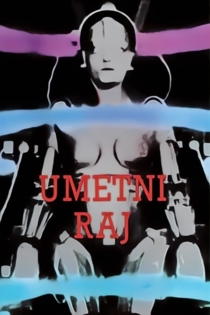
Umetni raj
Karpo Aćimović-Godina
Jürgen Morche, Vlado Novak
Los Angeles in 1935. Fritz Lang receives in his hotel apartment the young film amateur Willy, who wants to prepare an interview with him. At a certain moment Lang starts relating how, as an army officer in the First World War, he spent some time in the house of the lawyer Karol Gatnik in a small town in the northeast of Slovenia. Lang makes friends with Gatnik and gets aquainted with all members of his family. When Lang finds out that Gatnik is a passionate film amateur and that he also possesses his own camera, they make a film together. This is probably Lang’s first contact with cinematography. Late at night Lang looks at the photographs in Los Angeles and revives in his spirit the imaginary meeting with his friend Gatnik.
Artificial Paradise
Nekoč so bili ljudje
Goran Vojnović
Francesco Borchi, Moamer Kasumović
Leo is an Italian who lives in Slovenia. Vučko is a Bosnian who arrived to Slovenia as a child refugee. Leo continues to stay in Slovenia because of his ex-wife Tanja and his son Luka, hoping that they can become a family again. When the bank refuses to grant a loan Leo and Vučko would need to renovate their restaurant, they have no choice but to accept an offer from Gianni, a swindler. They are tasked with stealing Gianni’s truck so that he can collect the insurance money. However, instead of stealing Gianni’s truck, Leo and Vučko mistakenly steal a truck full of refugees. Vučko the refugee and Leo the migrant themselves thus inadvertently become responsible for destinies of people similarly unfortunate as they had once been. In order to solve their financial problems, they decide to sell the refugees. At first it seems that they are not indifferent towards these people, but with each passing day there is less and less humanity left in Leo and Vučko.
Once Were Humans