
Gérard Giroudon
2021
Le misanthrope
Jean-Paul Carrère
Georges Descrières, Michel Duchaussoy
Alceste hates all of humanity, denounces its hypocrisy, cowardice and compromise. But he nevertheless loves Célimène, flirtatious and slanderous. The virtuous thus launches into battles lost in advance which force him to flee.
Le misanthrope


La voleuse de Saint-Lubin
Claire Devers
Dominique Blanc, Denis Podalydès
Françoise Barnier, the film's heroine, is a mother. One day, she stole something. She was in dire straits but no more so than usual. She was not in debt. She had always refused the degradation of excessive debt and charities, attempting to live in line with the rules laid down by society and the law. We follow her journey through the judicial institution. Here, two ideas of justice and law collide.
La voleuse de Saint-Lubin


Dom Juan & Sganarelle
Vincent Macaigne
Loïc Corbery, Suliane Brahim
Woman hero Dom Juan lives a life full of excesses and love affairs. When he seduces the nun Elvire, but shows no interest in her a short time later, he gets to deal with her vengeful brothers. Dom Juan and his assistant Sganarelle have to flee and set out on a journey full of strange encounters.
Dom Juan & Sganarelle

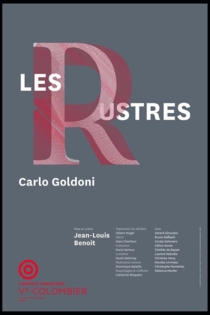
Les rustres
Jean-Louis Benoît
Gérard Giroudon, Bruno Raffaelli
Written in 1760, Carlo Goldoni’s comedy has never been performed at the Comédie-Française, perhaps overshadowed by the famousHoliday Trilogy. A satire of the Venetian merchant class, embodied by narrow-minded, complaining and intolerant men whose mistrust of the fairer sex borders on the absurd, The Boors perfectly illustrates Goldoni’s theatre, a “theatre of life with a real content, characters observed in reality, and a natural expression.” Thus, a theatre in which the man Voltaire described as “nature’s son and painter” scrutinises his contemporaries, their relationships and their social behaviour. His work served to entertain while providing posterity with an acute testimony of the morals of his time. Indeed, Jean-Louis Benoit warns against reducing the author to a simple “photographer of reality”.
Les rustres
Le Triomphe de l'amour
Édouard Logereau
Michel Aumont, Yvonne Gaudeau
First performed in 1732, Marivaux's play on the theme of cross-dressing, depicts the stratagems of the young princess Léonide in love with Agis, the legitimate heir to the throne of Sparta. To meet the prince, watched over by the philosopher Hermocrates and his sister, Léonide disguises herself as a man and seduces the whole household.
Le triomphe de l'amour