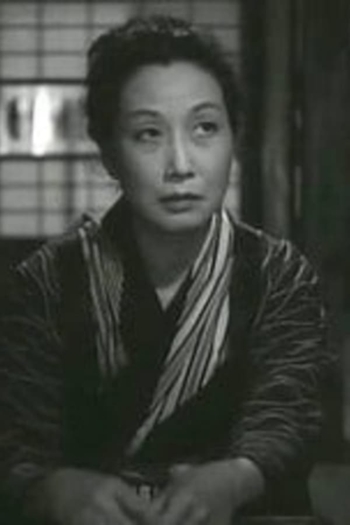
Chikako Hosokawa
1905 - 1976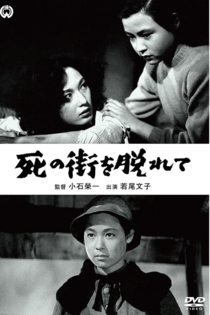
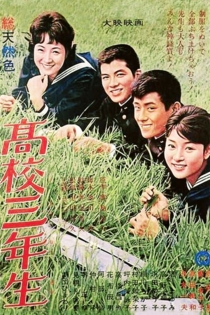
高校三年生
Yoshio Inoue
Isao Kuraishi, Michiko Sugata
In 1963, Funaki Kazuo's debut song of the same name was released and then it was adapted to a movie based on Kenji Tomishima 's novel “Shake to Tomorrow” with the same title, produced by Daiei with this song as a motif. Singer and actor Funaki Kazuo also appears in the movie, which depicts the fun, love and heartbreak in a Japanese school.
High School Third Graders
When a Woman Ascends the Stairs
Mikio Naruse
Hideko Takamine, Masayuki Mori
Keiko, whom everyone calls Mama, narrates her story: she's a hostess on the Ginza, 30, a widow. She describes life's vicious cycle: acting cheerful around drunks, dressing and living well to convey confidence, needing money for these expenses and for her demanding mother and brother, and knowing she's growing older. She's of an age when she must choose: to seek marriage (difficult given her tarnished occupation), to be a kept woman, or to borrow money to buy a bar of her own. Each route has dangers, including investors demanding a return on their loans. Keiko has a quiet dignity that attracts men, but are they what they seem? Does she actually have choices?
When a Woman Ascends the Stairs

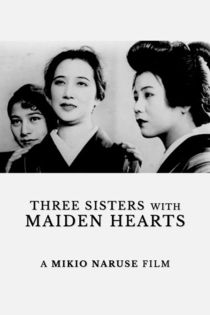
妻よ薔薇のやうに
Mikio Naruse
Sachiko Chiba, Yuriko Hanabusa
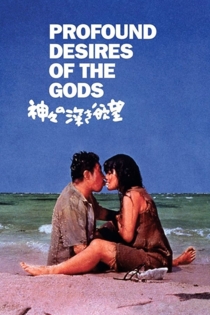
Kimiko, a Tokyo white-collar working girl, lives with her serious, intellectual, haiku-writing mother. Kimiko seeks to marry her boyfriend but needs her absent father to act as the go-between and negotiate the marriage. Kimiko travels and finds her father living with a second family.
Wife! Be Like a Rose!
晩菊
Mikio Naruse
Haruko Sugimura, Sadako Sawamura
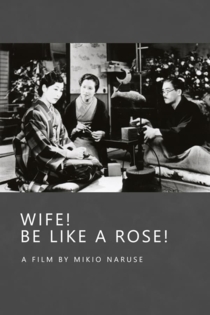
What is the life of a Geisha like once her beauty has faded and she has retired? Kin has saved her money, and has become a wealthy money-lender, spending her days cold-heartedly collecting debts. Even her best friends, Tomi, Nobu, and Tamae, who were her fellow Geisha, are now indebted to her. For all of them, the glamor of their young lives has passed; Tomi and Tamae have children, but their children have disappointed them. Kin has two former lovers who still pursue her; one she wants to see, and the other she doesn't. But even the one she remembers fondly, when he shows up, proves to be a disappointment.
Late Chrysanthemums
That Guy and I
Kō Nakahira
Yûjirô Ishihara, Izumi Ashikawa
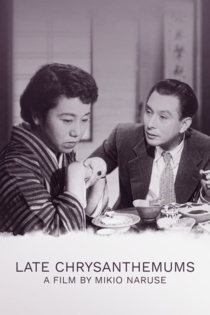
Asada Keiko and Kurokawa Saburo are two young college students. When Keiko visits Saburo's house, she meets his father Kokichi and his mother Motoko. Motoko is a famous hair dresser, who openly flaunts her lover. When Kokichi and Motoko fight, which they do a lot, he routinely threatens to leave but never quite does. A relationship develops between Saburo and Keiko, but Saburo is shaken when his mother tells Keiko the truth about Saburo's past and the secret of his birth.
That Guy and I
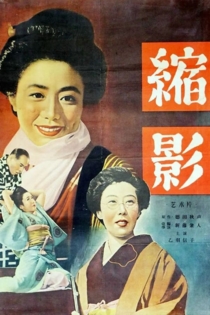
縮図
Kaneto Shindō
Nobuko Otowa, Sumiko Hidaka
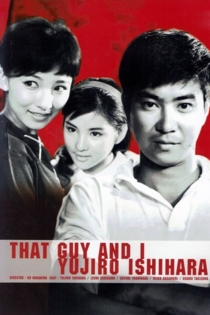
Ginko, a poor cobbler's daughter, becomes a geisha to support her family. She passes from one geisha house to the next, trying to find love and hope in the process. No matter how hard she tries, she just can't escape her sad fate.
Miniature
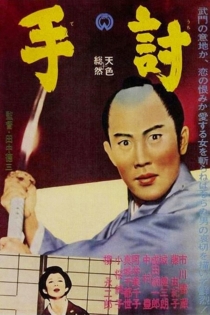
手討
Tokuzō Tanaka
Raizō Ichikawa, Yukiko Fuji
The shogun's vassal Harima Aoyama and a chamber maid are in love with each other, but they cannot be together due to a difference of their status. Soon, an offer of marriage is brought to Harima. Trying to test his love, Okiku breaks one of the plates of the family treasure of the Aoyama family, but Harima doesn't notice. However, someone surrounding her witnesses the moment Okiku breaks the plate on purpose.
A Samurai Never Tells a Lie
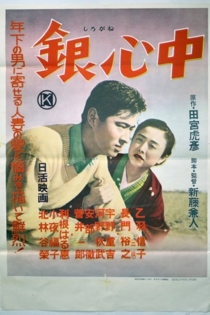
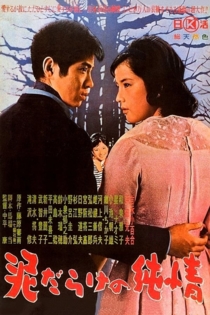
泥だらけの純情
Kō Nakahira
Sayuri Yoshinaga, Mitsuo Hamada
Jiro, a young yakuza, and Mami, a diplomat’s daughter, are two young lovers from different worlds. Having met by accident, they soon discover a new life together. But their love is ill-fated. Mami's family will not accept her choice, while leading an honest life seems like an unattainable goal for Jiro. Can there be anything else but a tragic ending?
The Mud-Spattered Pure Heart