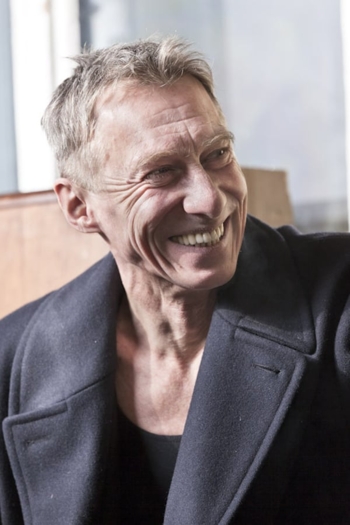
János Bán
1955 (70 лет)転生したら剣でした
Péter Bacsó
Juli Básti, György Cserhalmi
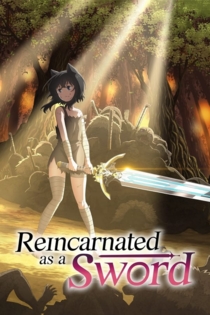
Reincarnated as a sentient weapon with memories of his past life, but not his name, a magical sword saves a young beastgirl from a life of slavery. Fran, the cat-eared girl, becomes his wielder, and wants only to grow stronger, while the sword wants to know why he is here. Together, the strange duo's journey has only just begun!
Reincarnated as a Sword
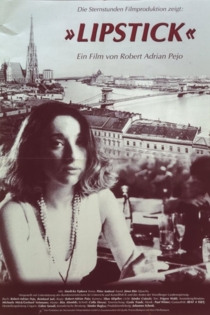
Lipstick
Robert-Adrian Pejo
Sinolička Trpkova, Péter Andorai
Lipstick strives to depict the inner conflicts of the protagonist Vesna as subjectively as possible. Vesna, apparently unmoved by the armed conflicts in her homeland Yugoslavia, leads a happy-go-lucky life. A form of denial, the causes of which should be explored. Her visit in Budapest and therefore her compromise with her possibly true, though repressed, identity, evokes a feeling of happiness for a short time. The next morning, reality catches up with her again. She is taken off the train and is forced, since her passport and Austrian visa have both expired, to assume a new identity. Despite the futility of her undertaking, she refuses to make a statement concerning her person while in jail. What remains is the memory of a short-lived feeling of emotional success by delaying the course of events. The suggestion to consider a denial while in a condition of statelessness.
Lipstick
My Sweet Little Village
Jiří Menzel
János Bán, Marián Labuda
The movie's main storyline follows the life of Otík, a young man, in a tight-knit village community. The sweet-tempered Otík works as an assistant truck driver with Mr. Pávek, his older colleague and practical-minded neighbor. Pávek's family takes care of Otík, whose parents are dead. However, the two coworkers become at odds over Otík's inability to perform even the simplest tasks. Pávek demands that Otík be transferred to assist another driver, who happens to be a choleric and suspicious man named Turek (Turk in Czech). Rather than work with Turek, Otík decides to accept an offer of employment in Prague, but finds he does not fit in to the city life. After discovering that the transfer of Otík to Prague was a trick by a crooked politician to get a deal on Otík's large inherited house, Pávek agrees to give Otík a second chance and retrieves him from the city to resume their work together.
My Sweet Little Village

Béketárgyalás, avagy az évszázad csütörtökig tart
Zsolt Balogh
Erika Marozsán, Béla Piri
International peace conference, events take place in the last week of 1899. Tragic love story between Vilma, daughter of the Austro-Hungarian envoy/ambassador, and Zoluk of Montenegro.
Peace Conference, or the Century Lasts Until Thursday

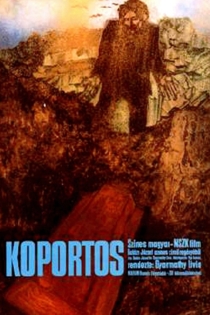
Koportos
Lívia Gyarmathy
Mihály Rostás, Ferenc Bogdán
Balog Mihály, the Gypsy man from Szabolcs works in Budapest. That is where he is notified that his young wife died. Again he behaves differently from his fellow-men in the Koportos Gypsy settlement: he wants to give a beautiful, rich burial ceremony to his wife.
Koportos
Kabala
János Rózsa
Júlia Nyakó, Zoltán Jakab
The parents of Kabala (Lucky Charm) and Facsiga (Wooden Top) are divorced. Kabala, an adolescent girl was awarded to the father, while Facsiga, the younger brother was awarded to the mother, but they do not really belong to anyone. The two children want to live together at all costs.
Mascot
Fateless
Lajos Koltai
Marcell Nagy, Béla Dóra
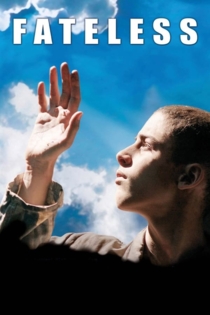
An Hungarian youth comes of age at Buchenwald during World War II. György Köves is 14, the son of a merchant who's sent to a forced labor camp. After his father's departure, György gets a job at a brickyard; his bus is stopped and its Jewish occupants sent to camps. There, György find camaraderie, suffering, cruelty, illness, and death. He hears advice on preserving one's dignity and self-esteem. He discovers hatred. If he does survive and returns to Budapest, what will he find? What is natural; what is it to be a Jew? Sepia, black and white, and color alternate to shade the mood.
Fateless
Csajok
Ildikó Szabó
Enikő Eszenyi, Dorottya Udvaros
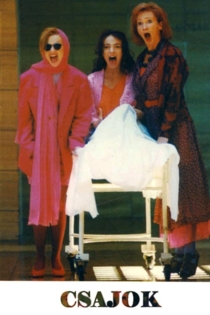
Enikős and Dorkas marriage is unbearable. Hysterical, cruel and humiliating scenes are enacted in front of the childrens eyes, while the childless Barbara is held by her husband, the painter, to be a toy and sometimes a painting screen.
Bitches

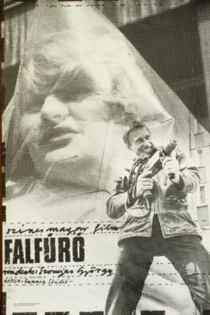
Falfúró
György Szomjas
János Bán, Renáta Szatler
The sad tale of a proletarian malcontent ensconced in a monstrously depressing housing project who—even less effectually than the heroes of Bald-Dog Rock—attempts to change his life. Purchasing a power drill and slinging it across his shoulder like the anti-hero of a spaghetti western, he turns entrepreneur, boring holes in his neighbors’ walls so that they can hang mirrors or pictures.
Wall Driller
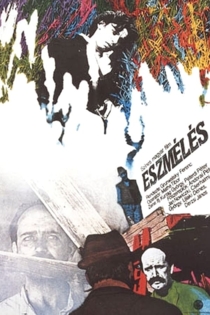
Eszmélés
Ferenc Grunwalsky
Ujlaki Dénes, Jan Nowicki
1894. The mortal remains of Lajos Kossuth are brought home from abroad, the railways are lined with people with their hats in hand, and among them stands the teenager Imre Tányér. 1910. The grown-up Imre undertakes the task to solve the question unsolved since 1848-49, i.e. the transformation of peasant life. He fights for the rights of his class, for justice, for human dignity in a society distorted, backward and built on inequality.
To See the Light
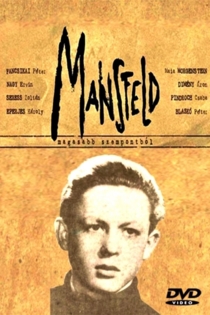
Mansfeld
Andor Szilágyi
Péter Fancsikai, Maia Morgenstern
At 15 he and his family became victims of state terror. At 16 he became a freedom fighter to participate in the 1956 Revolution against Soviet oppression. At 17 he is betrayed and arrested by the dreaded Secret Police (AVH). Now he has to spend the remainder of his life in a political prison, called Hell's Hallway, to reach the legal age of 18 before his death penalty can be carried out. Peter Mansfeld was 18 when he was unjustly executed by the totalitarian regime of Hungary. Today he is remembered as one of the national heroes of Hungary.
Mansfeld