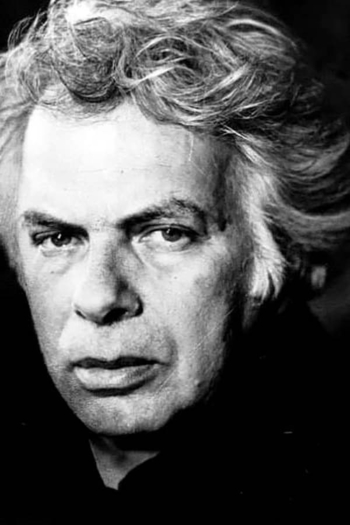
Nikos Koundouros
1926 - 2017Koundouros was born in Agios Nikolaos, Crete, in 1926. He studied painting and sculpture at the Athens School of Fine Arts. During the war he was a member of the left-wing resistance movement EAM-ELAS, and because of this was subsequently exiled to the Makronissos prison island. At the age of 28 he decided to follow a career in cinematography. He started his career as a director of the film Magiki Polis (1954), where he combined his neorealism influences with his own artistic viewpoint. He cast Thanasis Veggos, who he had met at Makronissos, as one of the characters in Magiki Polis. After the release of his complex and innovative film O Drakos, he found acceptance as a prominent artist in Greece and Europe, and acquired important awards in various international and Greek film festivals. His 1963 film Young Aphrodites won the Silver Bear for Best Director at the 13th Berlin International Film Festival. In 1985 he was a member of the jury at the 14th Moscow International Film Festival.

Affection to the People
Vasilis Douvlis, Vassilis Douvlis
Ilias Markou, Georgia Anesti
A documentary about cinema censorship during the dictatorship in Greece (1967- 1974), based on never-before-seen state archives. The film includes clips of films which were either censored or banned, newsreels of that era, interviews with famous directors and also secret documents from the reports of the Censorship Committee that are made public for the first time, portraying a revealing picture of the system’s control mechanisms and providing a fresco of that time.
Affection to the People

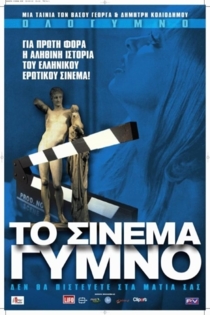
ΤΟ ΣΙΝΕΜΑ ΓΥΜΝΟ
Vassos Georgas
Kostas Gousgounis, Dimitris Athanitis
In the early 70s Greek cinema entered in a period of crisis. One of its aspects was said "crisis of issues" and one of the exits heard in the name "erotic cinema". The genre was already acquaintance from the abundance of foreigner films, that was distributed in the grindhouses under the "adults only" motto and its Greek version had a lot of variants.
Naked Cinema
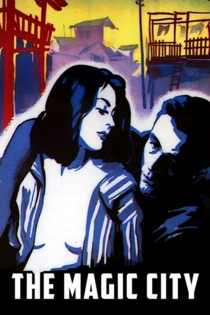
Μαγική Πόλη
Nikos Koundouros
George Foundas, Margarita Papageorgiou
A look at poverty in post-war Athens. Kosmas, a young man living in the slums, constantly tries to make ends meet, hoping for a better day. Because of debts, he gets tangled up in smuggling. His morals are tested and he tries to find a way out.
The Magic City
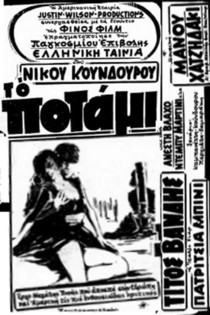
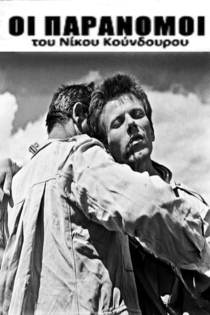
Μικρές Αφροδίτες
Nikos Koundouros
Eleni Prokopiou, Takis Emmanuel
200 BC. During a merciless drought, the brute nature of man and the delicate essence of woman become inextricably intertwined, as the omnipotence of the carnal instinct demands the total surrender of the flesh.
Young Aphrodites
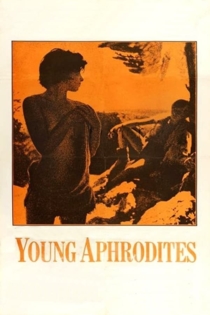
1922
Nikos Koundouros
Antigoni Amanitou, Zaharias Rohas
Поражение Греции в Греко-турецкой войне 1919-1922-го годов и занятие турецкими войсками Смирны (Измира) привело к одной из самых крупных этнических катастроф первой половины XX-го века. Геноцид христианского населения кемалистами показан глазами трех греков: школьного учителя, дочери богатого торговца и 17-летнего юноши-студента…
1922
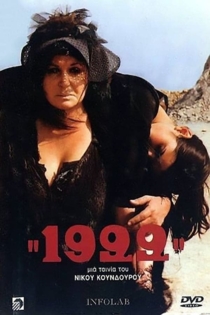
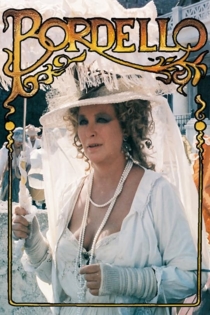
Bordelo
Nikos Koundouros
Marina Vlady, Eleonora Stathopoulou
Crete 1897. Greek rebels gained their freedom by fighting in the mountains. An allied fleet of French, English, Italian and Russian warships anchored in the port of Chania in protecting Greek and Turkish inhabitants. Rosa Bonaparte, accompanied by twelve girls off at a deserted beach with all the equipment of a Marseille brothel. Installed in a wing of a huge, ruined former Town Hall, where the officers of the allied fleet meet and entertain in the evenings surrounded by undercover agents, military connectors, and speculators : an East-West mosaic of languages, costumes and intrigue ...
Bordello
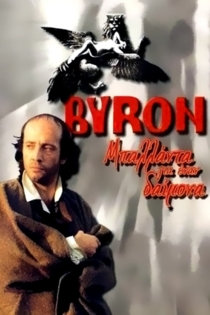
Μπάιρον: Η Μπαλάντα ενός Δαιμονισμένου
Nikos Koundouros
Manos Vakousis, Vasilis Laggos
Poet Lord Byron decides to fight with the Greek revolutionaries in Missolonghi against the Turks but instead the glorious battle wrestles with fever and his own demons.
Byron: Ballad for a Daemon
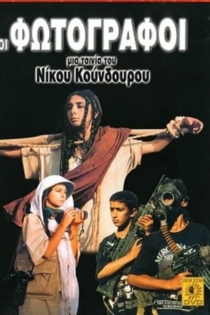
Οι φωτογράφοι
Nikos Koundouros
Michalis Iatropoulos, Katerina Pavlaki
In a nonaligned country, where a civil conflict is raging, a team of photographers follows a mercenary war lord, whose men wreak havoc among enemies and innocents alike. The story is a modern version of the tragedy Antigone, in a time when TV and the other media present unrelieved visions of war and bloody mayhem.
The Photographers