Graciela Borges
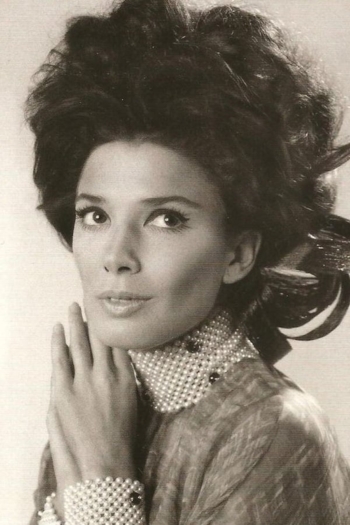
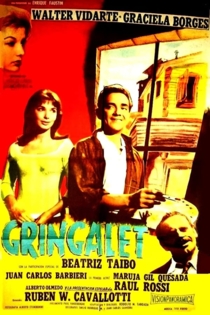
1941 (84 года)Graciela Borges (Spanish pronunciation: [ɡɾaˈsjela ˈβorxes]; born Graciela Noemí Zabala, June 10, 1941) is an Argentine television and film actress. Borges was born in Dolores. Having made her film debut at 14, she has acted in over fifty films and was featured in 2006 in Vogue Paris as "the great actress of Argentine cinema". She has been working in the Argentine cinema and television since her first role in the film Zafra (Sugar Harvest) in 1958.
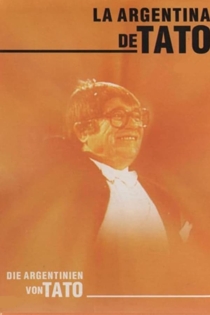
La Argentina de Tato
Alejandro Borensztein, Sebastián Borensztein
Leonardo Sbaraglia, Alfredo Casero
In a Mockuocumentary format, led by the personage represented by Leonardo Sbaraglia, in 2499 the research is presented - carried out by scientists from the University of Heidelberg, Germany, whose exposition is in charge of Helmut Strasse, founder of the first school of Argentinology - about the remote existence of Argentina, an unknown country of great potential inexplicably disappeared from the face of the Earth.
Tato's Argentina
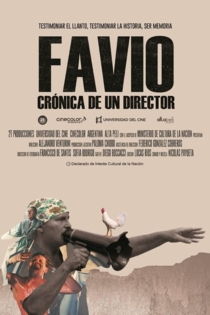
Favio: Crónica de un director
Alejandro Venturini
Graciela Borges, Juan José Camero
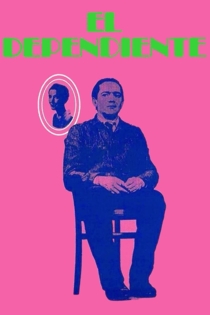
There are very few icons in Argentine culture capable of appealing to both popular and elitist tastes. Leonardo Favio was undoubtedly one of them. An unseasonable Peronist attached to the liturgy of his land, the director, born in the province of Mendoza, was and artist at every craft. a Renassaince man, but above all, a filmmaker. This is how "Favio: Chronicle of a Director" recaptures him, as a man of film who fed from radio, acting, music and painting in order to build up the handful of rhapsodies with which he adorned argentinean cinematography
Favio: Chronicle of a Director
Poor Butterfly
Raúl De la Torre
Graciela Borges, Lautaro Murúa
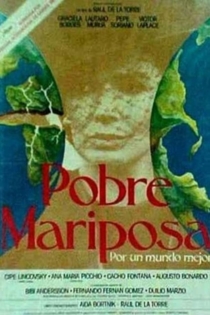
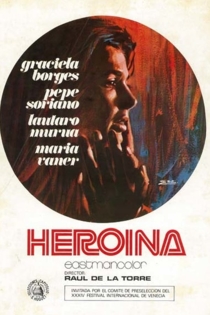
A turbulent era in Argentine politics is highlighted in this well-wrought drama, set in Buenos Aires at the end of 1945, about Clara (Graciela Borges), a young, half-Jewish woman awakening to the reasons behind the political conflicts of her time and place. Clara's father was a Communist who fought the Nazis in Argentina and possessed a list of the top Nazi exiles and their contacts. Through a former lover, Clara -- a successful broadcast journalist -- begins to see her Jewish roots (and the leftists) in a whole new light. Meanwhile, the political storms sweeping through Argentina are setting the stage for the Peronist government to come.
Poor Butterfly

Fin de fiesta
Leopoldo Torre Nilsson
Arturo García Buhr, Lautaro Murúa
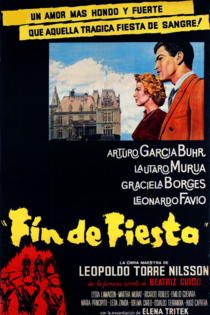
This routine drama set in Argentina during the 1930s draws parallels between a family patriarch and a political despot who stoops to any corrupt means to increase his power and wealth. The parallels are easy to make because the man is the same in both cases. The grandfather in the family has a rigid, tight-fisted control over his grandchildren, who eventually begin to rebel against his authoritarian and ironically puritanical behavior. At first, there is no real awareness of his opposite, criminal behavior outside the home. But as one of the grandsons begins to mature in his political savvy, the grandfather comes under well-deserved fire at last.
Fin de fiesta
Piel de verano
Leopoldo Torre Nilsson
Alfredo Alcón, Graciela Borges
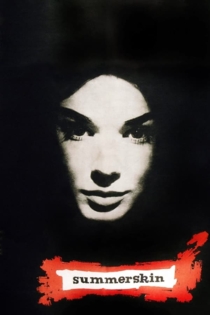
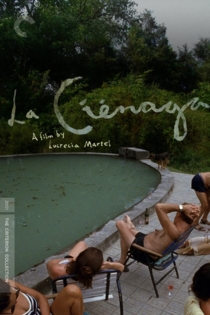
In this drama, a still-young grandmother has a suitor whose son is suffering from an incurable illness. The woman knows that the son has fallen in love with her granddaughter, but the granddaughter does not reciprocate his feelings. Convinced she should do something about that situation, grandmother talks her granddaughter into going on a trip to Paris with the young man -- intent on bringing the two together. But this simple plan, it turns out, has unforeseen consequences
Summerskin