
Estelle Parsons
1927 (98 лет)Estelle Margaret Parsons (born November 20, 1927) is an American theatre, film and television actress and occasional theatrical director.
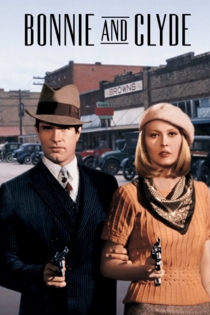
After studying law, Parsons became a singer before deciding to pursue a career in acting. She worked for the television program Today and made her stage debut in 1961. During the 1960s, Parsons established her career on Broadway before progressing to film. She received an Academy Award for Best Supporting Actress for her role as Blanche Barrow in Bonnie and Clyde (1967), and was also nominated for her work in Rachel, Rachel (1968).
Parsons worked extensively in film and theatre during the 1970s and later directed several Broadway productions. More recently her television work included a role in the sitcom Roseanne. Nominated on four occasions for a Tony Award, in 2004 Parsons was inducted into the American Theatre Hall of Fame.
Description above from the Wikipedia article Estelle Parsons, licensed under CC-BY-SA, full list of contributors on Wikipedia.

Broadway: Beyond the Golden Age
Rick McKay
Jonathan Groff, Jason Alexander
Broadway: Beyond the Golden Age explores the world of Broadway from 1959 through the early 1980s as recounted by a diverse cast of Broadway stars who lived through it, creating a first-hand archive of personal backstage stories and memories. The new documentary is the long-awaited sequel to late filmmaker Rick McKay’s award-winning 2003 film Broadway: The Golden Age, continuing the saga into the '60s and '70s and spotlighting beloved classic Broadway shows including Once Upon a Mattress, Bye Bye Birdie, Barefoot in the Park, Pippin, A Chorus Line, Ain’t Misbehavin’, Chicago, and 42nd Street. Featuring a galaxy of stars including Alec Baldwin, Carol Burnett, Glenn Close, André De Shields, Jane Fonda, Robert Goulet, Liza Minnelli, Chita Rivera, Dick Van Dyke, Ben Vereen, and many more, the film also includes rare archival photos and never-before-seen footage both onstage and off.
Broadway: Beyond the Golden Age

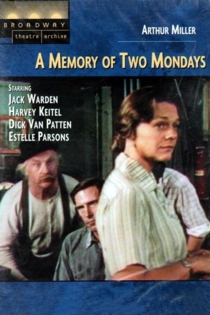
A Memory of Two Mondays
Paul Bogart
Donald Buka, Catherine Burns
Set in summer, 1933, in the depths of the Depression, Arthur Miller's most personal and intimate play focuses on the workers in a warehouse, a grim place in which men and women work for small wages and are grateful for the work. Appearing at the beginning of this production to set the scene, Miller observes that the Civil War and the Depression were the only times in American history in which the whole country was in the same boat-"You could not do a single thing that you wanted to do because no one had any money." The warehouse, he notes, became a grotesque sort of haven for the employees since they, at least, had jobs. Miller's own experience in a warehouse shows in his exceptionally realistic portrayal of the workers, men who often lose themselves in alcohol to escape reality, and women who must put up with sexual abuse and mistreatment to save their jobs.
A Memory of Two Mondays
I Never Sang for My Father
Gilbert Cates
Gene Hackman, Melvyn Douglas
Hackman plays a New York professor who wants a change in his life, and plans to get married to his girlfriend and move to California. His mother understands his need to get away, but warns him that moving so far away could be hard on his father. Just before the wedding, the mother dies. Hackman's sister (who has been disowned by their father for marrying a Jewish man) advises him to live his own life, and not let himself be controlled by their father.
I Never Sang for My Father

Rachel, Rachel
Paul Newman
Joanne Woodward, James Olson
Rachel is a 35 year old school teacher who has no man in her life and lives with her mother. When a man from the big city returns and asks her out, she begins to have to make decisions about her life and where she wants it to go.
Rachel, Rachel




Watermelon Man
Melvin Van Peebles
Godfrey Cambridge, Estelle Parsons
Jeff Gerber, a racist insurance agent and fitness freak, lives in a typical suburban neighborhood. But Jeff's bigoted world of taunting and harassing black people on and off the job is turned upside down when his skin inexplicably turns dark overnight. As Jeff tries to come to terms with this unexplained phenomenon that has befallen him, he soon becomes the victim himself, when all of his friends and neighbors suddenly shun and harass him.
Watermelon Man

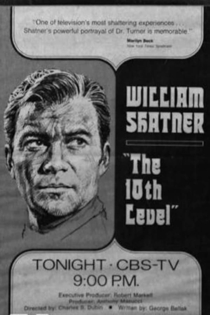
The Tenth Level
Charles S. Dubin
William Shatner, Lynn Carlin
Inspired by the Stanley Milgram obedience research, this TV movie chronicles a psychology professor's study to determine why people, such as the Nazis, were willing to "just follow orders" and do horrible things to others. Professor Stephen Turner leads students to believe that they are applying increasingly painful electric shocks to other subjects when they fail to perform a task correctly, and is alarmed to see how much pain the students can be convinced to inflict "in the name of science."
The Tenth Level

Boys on the Side
Herbert Ross
Whoopi Goldberg, Mary-Louise Parker
After breaking up with her girlfriend, a nightclub singer, Jane, answers a personal ad from Robin, a real estate agent with AIDS, seeking a cross-country travel partner. On their journey from New York City to Los Angeles, the two stop by Pittsburgh to pick up Jane's friend Holly, who is trying to escape an abusive relationship. With three distinct personalities, the women must overcome their differences to help one another.
Boys on the Side