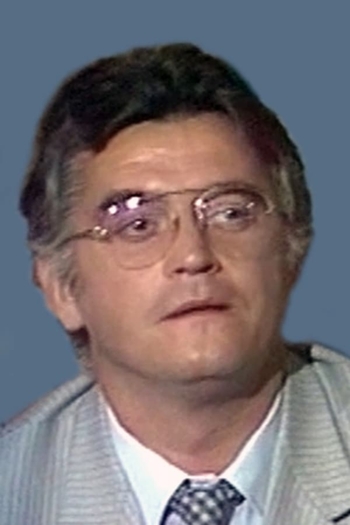
Eckhard Becker
1945 - 2009Levin's Mill
Horst Seemann
Erwin Geschonneck, Katja Paryla
In a small village in West Prussia in the 1870s, Germans, Poles, Gypsies and Jews live together as neighbors. One night Johann, a German mill-owner, secretly opens the dam gates and floods the mill of his Jewish rival Levin. After his business is ruined and his calls for justice go unanswered, Levin leaves town.
Levin's Mill




Käthe Kollwitz – Bilder eines Lebens
Ralf Kirsten
Jutta Wachowiak, Fred Düren
Kathe Kollwitz was 47 years old, and already a well established artist in Germany and abroad when Peter, her youngest son, volunteered to join the German army in WWI and was killed two weeks later. This painful tragedy changed Kollwitz's life and art forever.
Käthe Kollwitz – Pictures of a Life

Meine Stunde Null
Joachim Hasler
Manfred Krug, Anatoliy Kuznetsov
Germany in 1943. The Berlin worker Klaus Hartung is deployed as a soldier to the Eastern front during World War II. During a tour, he is captured by a Russian patrol. While in captivity, Hartung comes to the conclusion that he has to come through and actively take part in the effort to end the war. He consents to abduct a German officer together with two Russian soldiers. During their adventurous mission, the men who at first had been enemies, become sincere friends.
My Zero Hour
Heute sterben immer nur die anderen
Siegfried Kühn
Katrin Sass, Gudrun Ritter
Maria tells her former colleague, Hanna, that she has undergone a cancer operation but is now cured. Soon after, she suffers a relapse. The doctors believe that she should be told the truth about her condition, and Hanna is willing to do so. For Maria, it is the beginning of several long, agonizing weeks until she is ready to accept that she has only a very small amount of time left to live. In the meantime, Hanna has to decide how she can help her friend die; an almost unbearable decision, but once made she carries it out to the last consequence.
Heute sterben immer nur die anderen

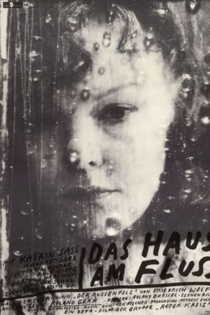
Das Haus am Fluss
Roland Gräf
Katrin Sass, Sylvester Groth
1942. The members of the Voß family, mother, two daughters, a daughter-in-law, and a son-in-law, are living in a house at the river. A fellow soldier of son Paul, who fights at the eastern front, delivers his greetings and an embroidered Russian blouse for Emmi, Paul′s wife. Daughter Agnes, whose husband is also fighting in the war, receives a fur vest from the junior partner who is stalking her. Obviously, the vest is also loot from the eastern front. When the family receives news that Emmi′s husband has been killed in action, the war finally enters the house at the river. Emmi commits suicide while Agnes′s husband returns as a cripple from the war front. At home, he has to learn what a price his wife had to pay for the "Russian fur".
Das Haus am Fluss
Du und ich und Klein-Paris
Werner W. Wallroth
Evelyn Opoczynski, Jaecki Schwarz
When 17-year-old Angelika moves to Leipzig, she is forced to rent a room at Mrs. Häublein’s for a start, since her parents will not follow until a few months later. Fellow tenant Thomas, a philosophy student, is not at all enthused about his new, pretty housemate. Because of Angelika he has to move into a smaller room. Furthermore, he is annoyed at her many male acquaintances, without sensing that his aggression might be prompted by jealousy. When Angelika’s father comes for a visit, he asks Thomas to keep an eye on his daughter. Thomas takes this assignment very seriously and finally realizes that he has fallen in love with Angelika.
Du und ich und Klein-Paris

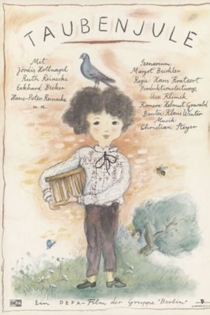
Taubenjule
Hans Kratzert
Jördis Hollnagel, Ruth Reinecke
Eleven-year-old Jella lives with her mother in a rural idyll in which both feel at home and comfortable. Then, however, they move to the city where her father works. On parting, her friend Freitag presents Jella with a pair of pigeons. Although Jella is looking forward to life in the city, she is unable to accustom herself to her new surroundings. She is being picked on by the other children, and a neighbor′s son even releases her pigeons. They fly back to Freitag who returns them to Jella. When Jella visits the village one day, she is disappointed to learn that she has become a stranger there, as well.
Taubenjule
Der Traum vom Elch
Siegfried Kühn
Katrin Sass, Marie Gruber
The nurses and friends Anna and Annette grow desperate over men and love. At the hospital, Anna has fallen in love with Markus, whom she lovingly calls "moose", but they only meet twice a year, when Markus has time for her. In the meantime, she keeps afloat with flights of fancy. Meanwhile, Annette clings to the painter Ludwig who cannot stand such a close relationship. Through Annette and Ludwig, Anna meets an attractive married man but her high spirits do not last long.
Der Traum vom Elch