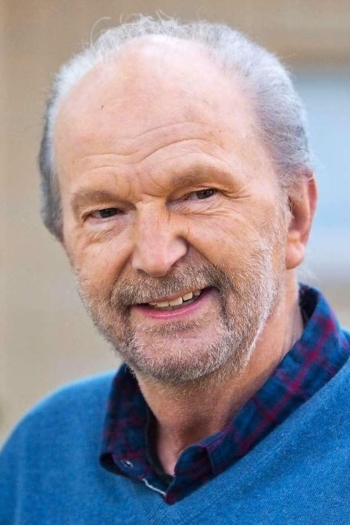
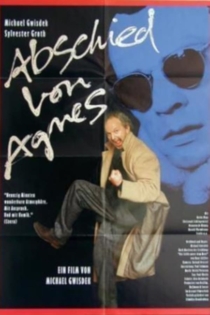
Michael Gwisdek
1942 - 2020
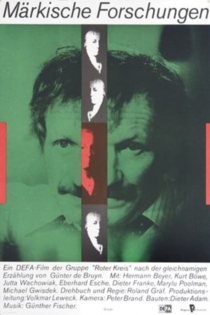
Exploring The Brandenburg Marche
Roland Gräf
Hermann Beyer, Kurt Böwe
On a forest road in the Brandenburg March, village teacher Potsch accidentally encounters the distinguished Professor Menzel, who got stuck there in his car. In the conversation that ensues, Menzel and Pötsch quickly discover that they both are great admirers of the early 19th-century writer Max von Schwedenow who was born in the area.
Exploring the Brandenburg Marche
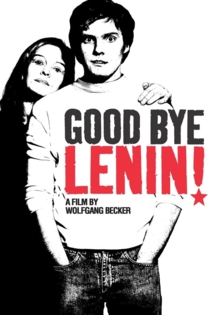
Good Bye Lenin!
Wolfgang Becker
Daniel Brühl, Katrin Sass
Alex Kerner's mother was in a coma while the Berlin wall fell. When she wakes up he must try to keep her from learning what happened (as she was an avid communist supporter) to avoid shocking her which could lead to another heart attack.
Good Bye, Lenin!
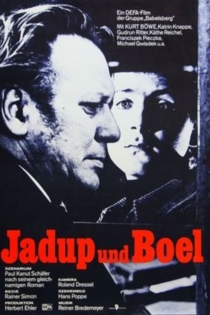
Jadup und Boel
Rainer Simon
Kurt Böwe, Katrin Knappe
In a small town, everyone has tried to forget what happened shortly after WWII. That is, until a stranger finds a book that Jadup (Kurt Böwe) gave to the young refugee Boel (Katrin Knappe), who resettled in the town over 30 years ago. Painful memories about Boel and the post-war period begin to surface and shake up the whole town. Boel vanished back then and nobody knew why. Word spread about a rape and some tried to blame a Russian soldier. Jadup, the town's respected and popular mayor, remembers, though, how he mistrusted Boel and did not help her through this difficult time; HE didn't even notice THAT Boel loved him. Jadup's confrontation with the past gives him a new, critical view of his current situation and surroundings.
Jadup and Boel
Speer und er
Heinrich Breloer
Sebastian Koch, Tobias Moretti
A reassessment of the role Albert Speer played in the Third Reich. Speer, who was ultimately convicted at the Nuremburg trials and served a 20-year prison sentence, was known for designing many of the Third Reich's buildings and for being Hitler's minister for war production.
Speer und er

Herzlich willkommen
Hark Bohm
Uwe Bohm, Barbara Auer
Friedrich (Uwe Bohm) manages to escape from East Germany to the West in the 1950s. On his arrival, he is greeted with the words Herzlich Willkommen, or "cordial, heartfelt welcome." However, once he finds employment, what he experiences is anything but a cordial welcome at his new job, where he is a teacher/counselor for "wayward children" located in a former castle. The institution is headed by a former Nazi who runs it with the help of the more criminal, bullying boys. Despite these obstacles, Friedrich manages to establish a rapport with a boy who wants to go "straight," and also begins to have an affair with an attractive female teacher at the school.
Herzlich willkommen
The Silent Revolution
Lars Kraume
Leonard Scheicher, Tom Gramenz
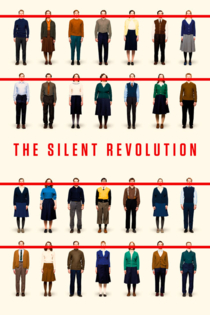
Stalinstadt, East Germany, 1956. While the Hungarian uprising against Soviets is taking place, teenage members of a classroom of the local school perform a seemingly harmless act that causes unexpected consequences.
The Silent Revolution
Addio, piccola mia
Lothar Warneke
Hilmar Eichhorn, Ute Lubosch
Last years in the Life of german Dramatican Georg Büchner. Around the year 1830 he and his fellow students try to initiate a revolution in Germany, but they are not successful. Büchner has to leave the country and seeks exile in France and Switzerland, where he falls ill with typhus.
Addio, piccola mia
The Actress
Siegfried Kühn
Corinna Harfouch, André Hennicke
The year 1933: Successful actress Maria Rheine is in love with her Jewish colleague Mark Löwenthal. When the Nazis implement the racist Nuremberg Laws, their relationship is severely endangered. Defiant Maria decides to stay together with Mark and ends her promising career: She assumes a Jewish identity and continues to work under the name Manja Löwenthal. She and Mark perform at the Jewish Theatre in Berlin, until they become victims of an intrigue: Their colleague Judith, who has a crush on Mark, denounces them to the secret police.
The Actress