Olimpia Carlisi
1946 (79 лет)Round the Moons Between Earth and Sea
Giuseppe M. Gaudino
Olimpia Carlisi, Tina Femiano
Giuseppe M. Gaudino made his directorial debut with this experimental film portrait contrasting the ancient Roman empire with poverty in present-day Naples. The film's narrator introduces the ancient town of Pozzuloi, home to Nero, his mother Agrippina, the Sibyl of Cumae, and Christian martyr Artema. This historical drama is intertwined with a modern-day story of a poverty-stricken family, forced by earthquakes during the '70s to move to the country, a devastating blow to the close-knit family. After a 1997 Venice Film Festival screening at 125 minutes, the filmmakers announced their plans to re-edit to a shorter running time. Also known as Moonspins Between Land and Sea.
Round the Moons Between Earth and Sea
Tolérance
Pierre-Henry Salfati
Ugo Tognazzi, Rupert Everett
In the 18th century, English aristocrats had, among their better known strange customs, one really strange one: they kept "ornamental hermits" for their gardens. These were actual people who were willing to live in squalid conditions and serve as something like museum exhibits for the amusement of the wealthy. This movie takes that notion and transfers it to 18th century France. In the story, an English hermit Rupert Everett) has somehow been brought to France in the period following the French Revolution, and prior to the Napoleonic Era, a period (1795-1799) known as "The Directory." He eventually comes down out of his tree into a chateau owned by an Italian nobleman (Ugo Tognazzi) and his wife. Before long, the hermit has washed and bathed and become quite presentable, even charming. However, his appearance in their midst is like a sentence of death for many of those who associate with him.
Tolérance
Facing Windows
Ferzan Özpetek
Massimo Girotti, Raoul Bova
Overburdened and stuck in a greying marriage, Giovanna takes to caring for a Jewish Holocaust survivor her husband brings home. As she begins to reflect on her life, she turns to the man who lives across from her.
Facing Windows

The Terrace
Ettore Scola
Vittorio Gassman, Ugo Tognazzi
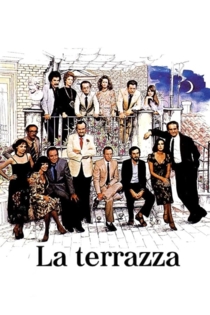
Drama about the difficulties of a group of people trying to change their lives. A group of people gathers in a terrace in Rome . Some are friends, some know each other and others just meet for the first time. All are intellectual and belong to the middle class.
The Terrace
Le Milieu du monde
Alain Tanner
Olimpia Carlisi, Philippe Léotard
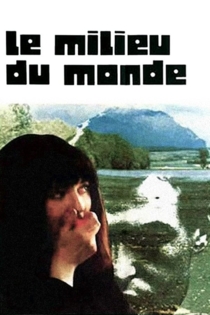
Paul is married, a successful engineer, and a conservative candidate in an upcoming local election. He falls in love with Adriana, a café waitress from Italy. Paul's party is very critical of foreign labour and wants to keep Switzerland to the Swiss. Where Paul falls deeper and deeper into the relationship and is ready to leave his wife, Adriana feels the social pressure growing and has to make her own decision.
The Middle of the World
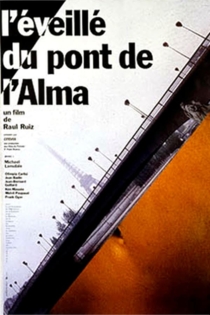
L'Éveillé du pont de l'Alma
Raúl Ruiz
Michael Lonsdale, Olimpia Carlisi
This quickly-filmed avant-garde farce by prolific director Raul Ruiz features an insomniac (Michel Lonsdale) whose main preoccupation is surreptitiously watching private matters -- he is a voyeur. He and an equally disreputable acquaintance rape a woman alongside the Seine, a crime made all the worse because she is pregnant. The rest of this slow-paced film deals with the consequences of that action.
The Insomniac on the Bridge
Três Irmãos
Teresa Villaverde
Maria de Medeiros, Marcello Urgeghe
This dark and intense drama follows the slow and painful destruction of a young, passive woman as she watches her family fall apart. Maria is the shy and dutiful daughter upon whose shoulders the family traumas have fallen. In addition to a regular job she cooks, cleans, and studies. Her parents offer no assistance as her father is blind, with a tendency towards violence when drinking. His wife, the focus of his violence is terribly unhappy. After a particularly brutal beating, Maria's brothers rise up against the father and end up leaving the home. It is up to Maria to try to bring the factions together. Maria's pressures increase after she calmly stabs her boss during an attempted rape, and then copes with her mother's suicide.
Two Brothers, My Sister


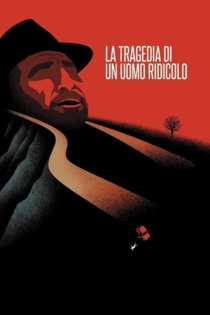
La tragedia di un uomo ridicolo
Bernardo Bertolucci
Ugo Tognazzi, Anouk Aimée
The son of the owner of a large Italian cheese factory is kidnapped, but as the factory is on the verge of bankruptcy the owner hatches a plan to use the ransom money as reinvestment in the factory.
Tragedy of a Ridiculous Man
Les yeux ne veulent pas en tout temps se fermer, ou Peut-être qu'un jour Rome se permettra de choisir à son tour
Jean-Marie Straub, Danièle Huillet
Adriano Aprà, Anne Brumagne
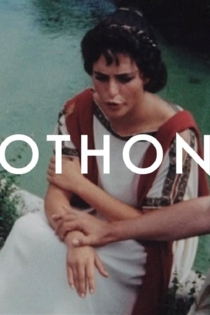
Straub-Huillet’s first color film, adapts a lesser-known Corneille tragedy from 1664, which in turn was based on an episode of imperial court intrigue chronicled in Tacitus’s Histories. The costuming is classical, and the toga-clad, nonprofessional cast performs the drama’s original French text amid the ruins of Rome’s Palatine Hill while the noise of contemporary urban life hums in the background. Their lines are executed with a terrific flatness and frequently through heavy accents; the language in Othon becomes not merely an expression but a thing itself, an element whose plainness here alerts us to qualities of the work that might otherwise be subordinated.
Othon
Misunderstood
Asia Argento
Giulia Salerno, Charlotte Gainsbourg
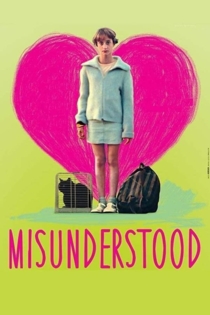
Rome, 1984, Aria is nine-year-old girl. On the verge of divorce, Aria's infantile and selfish parents are too preoccupied with their careers and extra-marital affairs to properly tend to any of Aria's needs. While her two older sisters are pampered, Aria is treated with cold indifference. Yet she yearns to love and to be loved. At school, Aria excels academically but is considered a misfit by everyone. She is misunderstood. Aria finds comfort in her cat - Dac and in her best friend - Angelica. Thrown out of both parents' homes, abandoned by all, even her best friend, Aria finally reaches the limit of what she can bear. She makes an unexpected decision in her life.
Misunderstood
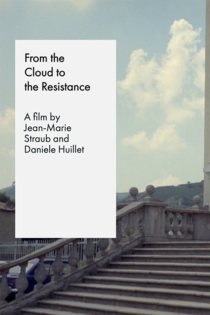
Dalla nube alla resistenza
Jean-Marie Straub, Danièle Huillet
Olimpia Carlisi, Guido Lombardi
'Dalla nube alla resistenza (From the Cloud to the Resistance ) (1978), based on two works by Cesare Pavese, falls into the category of History Lessons and Too Early, Too Late as well. It, too, has two parts—a twentieth-century text and a text regarding the myths of antiquity, each set in the appropriate landscape. Pavese's The Moon and the Bonfires looks back on the violent deaths of Italian anti-Fascist resistance fighters; Dialogues with Leucò is a series of dialogues between heroes and gods, connecting myth and history and returning to an ambiguous stage in the creation of distinctions, such as that between animal and human, which are fundamental to grammar and language itself. Such a juxtaposition of political engagement with profoundly contemplative issues such as myth, nature, and meaning points to the characters of Empedocles and Antigone in the Hölderlin films.' (From "Landscapes of resistance. The German Films of Danièle Huillet and Jean-Marie Straub" by Barton Byg)
From the Clouds to the Resistance
Tu mi turbi
Roberto Benigni
Roberto Benigni, Nicoletta Braschi
The first movie directed by Roberto Benigni in four surreal short stories: "Durante Cristo" (During Christ), "Angelo" (Angel), , "In Banca" (At the Bank) and "I Due Militi" (The Two Soldiers). An excursus in Benigni's satirical views on man, religion and society.
You Upset Me