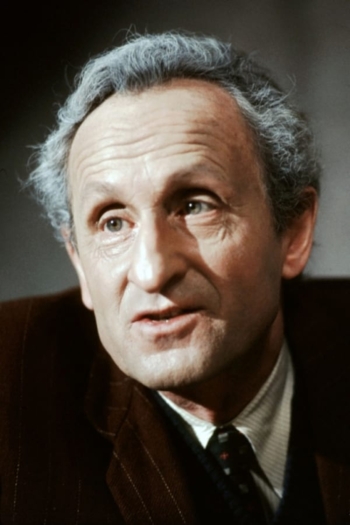
Franciszek Pieczka
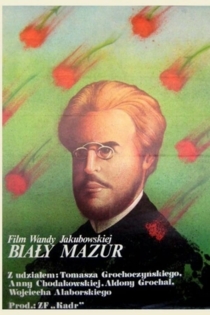
1928 (98 лет)Biały mazur
Wanda Jakubowska
Tomasz Grochoczyński, Anna Chodakowska
A film about the life and activities of the Polish revolutionary Ludwik Waryński. In his memoirs, Ludwik returns to his student years in St. Petersburg, to Warsaw, to Krakow, where he was arrested and put on trial. After the end of the process in Krakow, Waryński leaves for Geneva, where he meets with Russian revolutionaries. In 1881, he returned to his homeland and created the first party of workers in Poland...
The White Mazurka

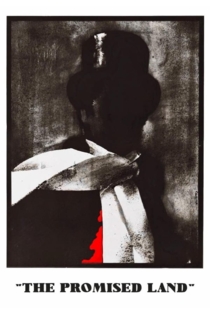
The Promised Land
Andrzej Wajda
Daniel Olbrychski, Wojciech Pszoniak
The Polish film based on the book of the same name by Wladyslaw Reymont. Taking place in the nineteenth century town of Łódź, Poland, three friends want to make a lot of money by building and investing in a textile factory. An exceptional portrait of rapid industrial expansion shown through the eyes of one Polish town.
The Promised Land
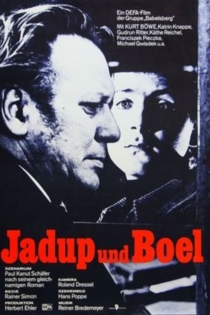
Jadup und Boel
Rainer Simon
Kurt Böwe, Katrin Knappe
In a small town, everyone has tried to forget what happened shortly after WWII. That is, until a stranger finds a book that Jadup (Kurt Böwe) gave to the young refugee Boel (Katrin Knappe), who resettled in the town over 30 years ago. Painful memories about Boel and the post-war period begin to surface and shake up the whole town. Boel vanished back then and nobody knew why. Word spread about a rape and some tried to blame a Russian soldier. Jadup, the town's respected and popular mayor, remembers, though, how he mistrusted Boel and did not help her through this difficult time; HE didn't even notice THAT Boel loved him. Jadup's confrontation with the past gives him a new, critical view of his current situation and surroundings.
Jadup and Boel
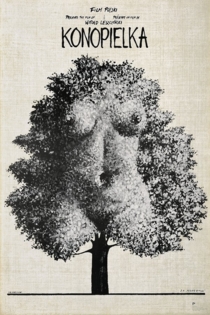
The Linnet
Witold Leszczyński
Krzysztof Majchrzak, Anna Seniuk
Kaziuk, a stubborn peasant and his pregnant wife live in a backwood village, unaffected by the civilization. The village is once visited by a couple of wanderers, and strange things start to happen afterward. A new schoolteacher is sent to the area. She stirs erotic fantasies in Kaziuk. In a stir of frustration Kaziuk cuts down a family tree - a sacrilegious act in the eyes of his family. Going a step further and using a scythe for cutting the rye instead of a sickle brings the whole village against him.
The Linnet
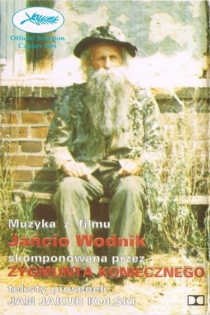
Jańcio Wodnik
Jan Jakub Kolski
Franciszek Pieczka, Bogusław Linda
On the road wandering minstrel finds a mare, which, upholstered and sickly, is dying. He buries mare and casts a curse in the village where the animal was tortured. In the village lives Jańcio, a philosopher, a man loving life and his young wife, Weronka. Jańcio lives in harmony with God and is not expecting that he will be put to the test by him. He is convinced he has the power to make miracles. He leaves his pregnant wife, and goes to see the world, promising to return before the due date.
Johnnie Waterman
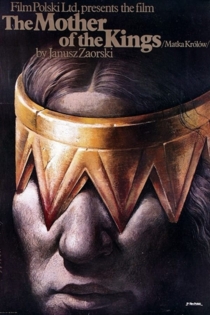
The Mother of the Kings
Janusz Zaorski
Magda Teresa Wójcik, Zbigniew Zapasiewicz
Made in 1982, shelved for five years. Story opens with Lucja Krol's husband under the tram. She gives birth to her fourth son on the floor of their new apartment. Neighbor Wiktor, a communist intellectual, befriends the poverty-stricken family but is soon arrested and sent to jail. During the war Lucja narrowly escapes a Nazi roundup at the black market. Her sons hold ardent Communist meetings in their apartment, with her blessing. Lucja works hard, but without complaint. After the war, Klemens is inexplicably arrested, accused by the new regime of being a collaborator. Wiktor, now a high-ranking party member, trying to defend him, himself falls into disgrace. Klemens is tortured to "confess" and dies in jail, a Communist to the end. Lucja is never told about his fate.
The Mother of the Kings
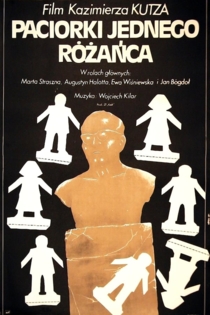
The Beads of One Rosary
Kazimierz Kutz
Marta Straszna, Augustyn Halotta
The crusty hero, Habryka, is an old miner who has won many worker medals and is now retired with his youngest son and latter's family living with him. To build new apartment buildings, the old houses are being bought out, the residents given apartments in the new houses, and being cleared away. But Habryka refuses to sell.
The Beads of One Rosary
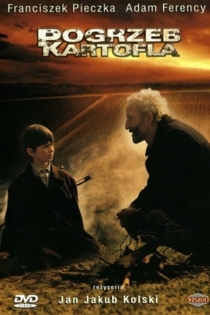
Pogrzeb kartofla
Jan Jakub Kolski
Franciszek Pieczka, Adam Ferency
Set in 1946, the film tells a story of a Polish villager returning home after years in a concentration camp. Mateusz is an old-timer, a saddler, who finds nothing but hostility when he makes it home after years away. He is not a Jew, though the villagers brand him one and give him a hard time. They feel guilty about the death of his son at the end of the war, and don't want the father around. In the background: beginnings of the Communist regime in Poland.
Burial of a Potato
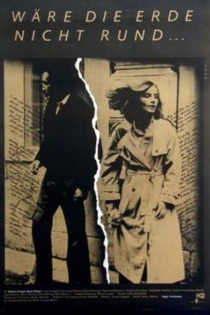
Wäre die Erde nicht rund...
Iris Gusner
Bożena Stryjkówna, Rasim Balayev
While studying in Moscow, the GDR resident Christiane falls in love with Hatem, a fellow student from Syria. The two become a couple and even have a child together. When their study draws to an end, Christiane and Hatem have to decide if they want to share their future together. After Hatem explains to Christiane that as a woman she will not be able to work in Syria, Christiane suggests moving to the GDR together. For Hatem, however, this is out of the question, since he considers it a betrayal of his country. Thus, the two young people are forced to go separate ways.
Wäre die Erde nicht rund...
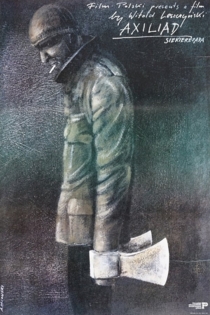
The Axiliad
Witold Leszczyński
Edward Żentara, Ludwik Pak
A young, idealistic poet, turns his back on civilization and goes to small, backwood village, rents a bed in the house of an old woman, and decides to make his living as a lumberjack. Soon he realizes that the world around him is far from perfect.
Axiliad
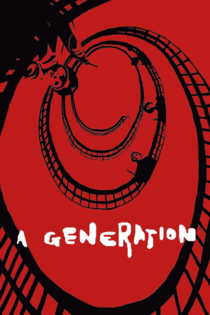
Pokolenie
Andrzej Wajda
Tadeusz Łomnicki, Urszula Modrzyńska
Stach is a wayward teen living in squalor on the outskirts of Nazi-occupied Warsaw. Guided by an avuncular Communist organizer, he is introduced to the underground resistance—and to the beautiful Dorota. Soon he is engaged in dangerous efforts to fight oppression and indignity, maturing as he assumes responsibility for others’ lives. A coming-of-age story of survival and shattering loss, A Generation delivers a brutal portrait of the human cost of war.
A Generation