
George Dunning
2021Dunning was born in Toronto, Ontario, Canada and studied in at the Ontario College of Art, and soon found freelance work as an illustrator. Dunning joined the National Film Board of Canada in 1943, where he worked with Norman McLare and contributed to several episodes of the Chants Populaires series. From 1944 to 1947 Dunning created many original short films and developed his skills animating articulated, painted, metal cut-outs.
In 1948, he spent a year working for UNESCO in Paris under the mentorship of Czech-born animator Berthold Bartosch. Then in 1949, he and fellow NFB grad Jim McKay created one of Toronto's first animation studios, Graphic Associates, where he produced commercials and gave Michael Snow his first job in film. Dunning later moved on to New York City working on UPA's The Gerald McBoing-Boing Show and in 1956 he moved to England to manage UPA's new London office. After the office went under, he hired many of the UPA staff to work for him and his newly established production company, T.V. Cartoons Ltd. (renamed TVC London). Among the animators working for TVC were Richard Williams and Jimmy Murakami. By 1961, TVC was producing about one hundred commercials a year. During this time Dunning also managed to make many personal short films noted for their surrealistic atmosphere and Kafkaesque themes. The Flying Man earned him the Annecy Cristal Grand Prix in 1962 while The Apple won the 1963 BAFTA Award.
Dunning also oversaw the cartoon series The Beatles for ABC, and this led to his involvement with Yellow Submarine (1968). Dunning was also responsible for the opening credits of Blake Edwards' A Shot in the Dark, along with a series of shorts and inserts including "the digger", for the BBC's Vision On series for children.
About the time of his death he was working on an animated version of Shakespeare's The Tempest, which was never completed. His company was briefly resurrected in the 1990s, before being merged with Varga Studio.
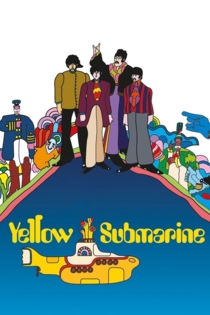
Yellow Submarine
George Dunning
Paul Angelis, John Clive
The wicked Blue Meanies take over Pepperland, eliminating all color and music. As the only survivor, the Lord Admiral escapes in the yellow submarine and journeys to Liverpool to enlist the help of the Beatles.
Yellow Submarine

Family Tree
Evelyn Lambart, George Dunning
The story of the settlement of Canada, illustrated with cheerful animated cartoons. The arrival of Jacques Cartier, the fishing and fur trades which followed, and the rival colonization by the French and British, climaxed by the battle of the Plains of Abraham, are depicted. The coming of the United Empire Loyalists is seen; then the west-coast gold rush and the completion of the transcontinental railway. New branches were added to the family tree when many European settlers came to fill the great spaces of the Prairies. Finally, we see the whole country matured into a nation, its traditions enriched by those of many peoples.
Family Tree

Cadet Rousselle
George Dunning
Colourful puppets illustrate the old French song about Cadet Rousselle, who falls down a ladder, who trips on battlements, and whose dogs will not obey him. The animated figures carry our hero through his predicaments with colour and verve.
Cadet Rousselle




Grim Pastures
George Dunning
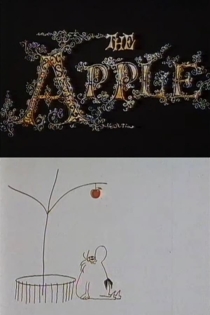
A humorous depiction of farm animals' need for proper fodder, Grim Pastures shows a horse and a cow both racing for the same bit of grass. The distracted beasts end up with sandwich boards with slogans imploring farmers to raise more fodder.
Grim Pastures
The Wardrobe
George Dunning, Richard Williams
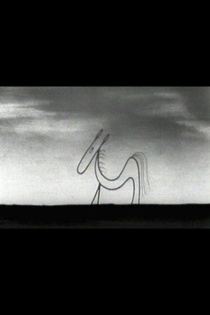
Cartoon: a man takes off his shoes and climbs into a wardrobe, Another man appears, tries to communicate, and finally steps into a wardrobe; noises; the first man climbs out wearing another pair of shoes, leaving the second man with the old pair.
The Wardrobe
