Zbigniew Józefowicz
1925 - 2016Ambulans
Janusz Morgenstern
Zbigniew Józefowicz, Leopold Rene Nowak
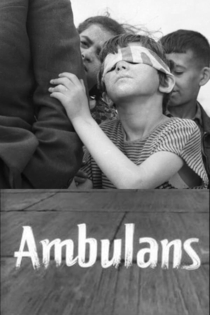
In this haunting short fiction film, a group of Jewish children and their teacher are herded into an ambulance by Nazis; the vehicle, ordinarily representing comfort and safety, becomes the group’s death chamber. Morgenstern’s presentation of the incident serves as a metaphor for the horror of the Holocaust, and provides a powerful trigger for discussion of the disturbing issues raised by the film. The figure of the children's’ teacher specifically parallels Janusz Korcak (1879-1942), a famous Jewish educator who ran an orphanage in the Warsaw ghetto and died with his young charges at Treblinka.
Ambulance
Westerplatte Resists
Stanisław Różewicz
Zygmunt Hübner, Arkadiusz Bazak
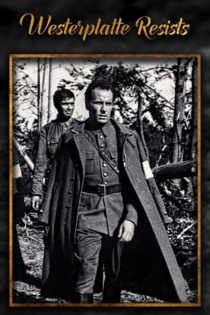
Westerplatte is a small peninsula at the entry to the Gdansk Harbour. Before World War II, it functioned as a Polish ammunition depot in the Free City of Danzig/Gdansk. Its crew consisted of one infantry company and a group of civilians, 182 people in total. It was the only Polish guard-post at the mouth of the Vistula River, with as little as five sentries, one field cannon, two anti-armour guns and four mortars. It was the first obstacle to Hitler's predatory march across Europe. The first shots of World War II were fired here. This film tells the story of Westerplatte's courageous defenders.
Westerplatte Resists
Two Gentlemen 'N'
Tadeusz Chmielewski
Joanna Jędryka, Janusz Bylczyński
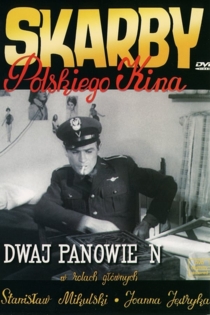
Kazmierz Dziewanowicz's hobby is very strange. He collects people who were born on the 29th of February. One day he sees that in his collection there are two men with the same name, the same birth place, the same date of birth and the same parents. In the middle of the night somebody kills him. The Intelligence Agency begins investigation.
Two Gentlemen 'N'
Echo
Stanisław Różewicz
Wienczysław Gliński, Barbara Horawianka
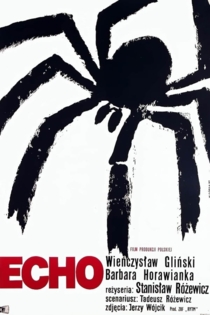
It seems that nothing can ruin Henryk’s (Wienczyslaw Glinski) happy life. He’s a respected lawyer, he’s loved by his son and wife. One day, he receives a letter from the prosecutor’s office. He’s accused of collaborating with the Gestapo. It’s an echo of his past under occupation.
Echo
Gdzie jest generał...
Tadeusz Chmielewski
Elżbieta Czyżewska, Jerzy Turek
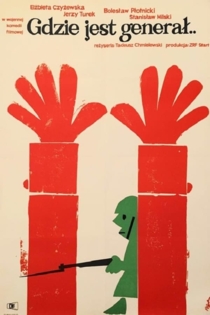
Waclaw Orzeszko is unlucky soldier. Nobody from the platoon likes him. One day he decided to go away from platoon. At the castle he meet Russian soldier Marusia. At this time German forces came at the castle. They must hide. But there is also second problem. Waclaw's platoon had to find deserter. Polish Soldier close to the castle.
Where is the General?
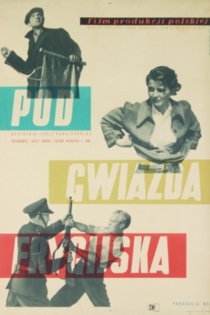
Pod gwiazda frygijska
Jerzy Kawalerowicz
Józef Nowak, Lucyna Winnicka
With the second part of his Cellulose Diptych, award-winning director Jerzy Kawalerowicz returns to protagonist Szczesny, now a full-fledged, middle-aged communist militant in pre-war Poland. Based on the writings of Igor Newerly, Kawalerowicz's epic chronicles the romance between Szczesny and the charismatic Madzia, as the ill-fated pair fall in love amid the social and political upheaval of their homeland.
Under the Phrygian Star

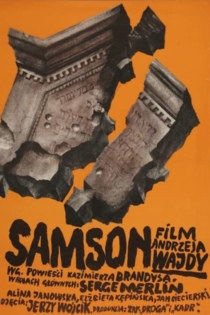
Samson
Andrzej Wajda
Serge Merlin, Alina Janowska
Sampson is one of several Andrzej Wajda films harking back to his youth during the Nazi Occupation of Poland. Many of these concern not only the struggle between good and evil, but also between passive and impassive. The hero is a Jewish youth. He, like his family, has always been silent and undemonstrative in the face of prejudice. Now he stands up for his right to survive, and in so doing represents the fighting spirit that culminated in the 1943 Warsaw Uprising. It was originally titled Samson, but re-spelled as Sampson upon its American release to avoid confusion with a sword-and-sandal epic of the same name.
Samson
Celuloza
Jerzy Kawalerowicz
Józef Nowak, Stanisław Milski
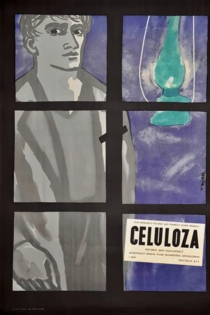
Through the fate of the boy - whose hunger drives from his home village , and who receives a severe school of life , going through different social environments in order to become conscious , revolutionary activist - creators show a realistic panorama of conflicts in pre-WWII Poland.
Cellulose