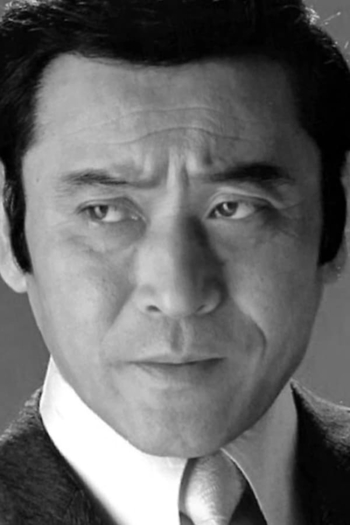
Shigeru Amachi
1931 - 1985Amachi joined the Shintoho studio as one of its "New Face" actors of 1951 and established himself in action and jidaigeki films. He gained fame for the nihilistic mood of his character in Akatsuki no hijōsen and starred in Nobuo Nakagawa's version of Tokaido Yotsuya kaidan (1959). On television, he played the hardboiled detective in Hijō no raisensu and Kogoro Akechi in a long-running series of TV specials. On stage he was best known for playing Hishakaku in Jinsei gekijō.
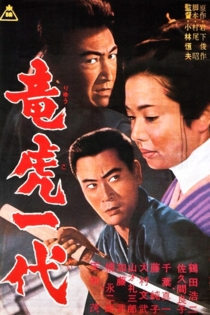
竜虎一代
Tsuneo Kobayashi
Koji Tsuruta, Sumiko Fuji
An early ninkyo film from before the genre had truly established its form. Koji Tsuruta plays an honourable outlaw who saves an older man from an ambush. It turns out the man is the head of a hard working clan appointed to a railway construction project. A ruthless yakuza gang is also trying to get their share of the project and attempts to sabotage the work. After the old man dies, his son (Sonny Chiba) and daughter (Junko Fuji) try to complete the project. Tsuruta joins them while also falling in love with a local woman working in a bar (after all, Tsuruta always was more of a lover than his stoic colleague Takakura).
Two Lives, Two Yakuza
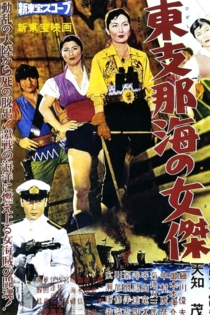
東支那海の女傑
Yoshiki Onoda
Miyuki Takakura, Shigeru Amachi
Rika, a manageress of a night club is about to be arrested on suspicion of smuggling. However, she escapes through the assistance rendered her by First Lieutenant Yokoyama of the Japanese Naval Commander's Office. After the end of war, Yokoyama plans to escape from riot-ridden Amoy and finally succeeds with the help of Rika to whom he gives a destroyer. Rika is actually the leader of a gang of pirates, and plans to rule the East China Sea by crushing Banryu, her rival.
Queen of the China Sea
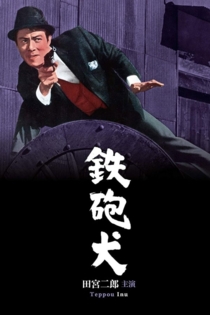
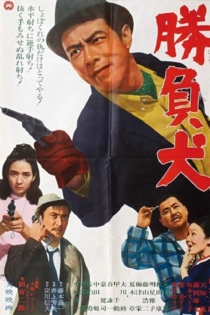
勝負犬
Yoshio Inoue
Jirō Tamiya, Shigeru Amachi
A series of murders has been committed by someone with a new model gun, a Mord-Gessel X 38. Indeed, Daisuke himself is almost killed while investigating the case. This occurred while he was with Ritsuko, daughter of a company president. Detective Kimura thinks that the president himself, returned to Japan after an absence of fifteen years, might be the killer, or at least the man who supplied the gun. Ritsuko's father limps and though she explains this as the result of a traffic accident, Kimura remembers a narcotics smuggler named Suginami who shot himself in the ankle and then escaped from the hospital. He believes that the company president and the drug peddler are the same.
The Silent Gun

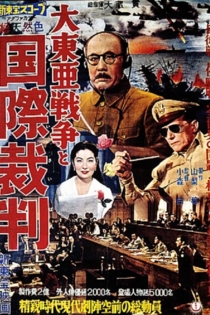
大東亜戦争と国際裁判
Kiyoshi Komori
Kanjūrō Arashi, Minoru Takada
In 1941, overpopulated Japan faces an economic boycott and its armed forces push further to the south. And despite negotiations between Japan and the U. S. A. war is declared with the attack on Pearl Harbour. Victories follow for Japan on land and sea and her forces push forward to the borders of India. But gradually the tide turns in favour of the Allies and after the atom bombings of Hiroshima and Nagasaki, Japan is compelled to accept the Potsdam Declaration and by the order of the Emperor agrees to unconditional surrender. Under the supervision of the occupation forces the International Military Tribunal opens in Tokyo to try the Japanese war leaders. Established in the cause of justice, and to prevent future aggressive wars the trials drag on for two and a half years. And on December 23, 1948, General Tojo and six other war leaders mount the thirteen steps to the gallows at Tokyo's Sugamo prison.
The Pacific War and the International Military Tribunal
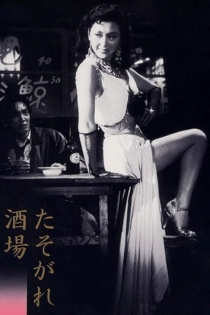
たそがれ酒場
Tomu Uchida
Daisuke Katō, Eijirō Tōno
Takes place in one place, a beer hall, over the course of one evening. Uchida employs this concentration of setting and time to fashion a microcosm for a group portrait of Japan. One by one, the regulars of the bar appear: the pianist who dreams of becoming a composer but has disappeared from the music world after a knifing; a stripper who had planned to be a ballet dancer; an elderly painter trying to make a living at pachinko, and who rues his art having been used for militarist propaganda during the war; a young waitress considering elopement; a colonel turned real estate broker who attempts to rouse the crowd in military song until he realizes the tune has been transformed by marchers in the street into a leftist chant. The "twilight" is more than just a time of day; here, it is a state of being, a suspension between past and present, between the camaraderie of the saloon and the harsh world outside.
Twilight Saloon
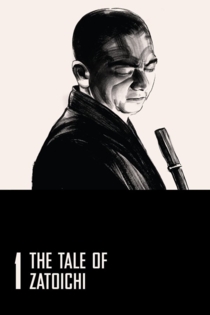
The Third Shadow Warrior
Umetsugu Inoue
Raizō Ichikawa, Hizuru Takachiho
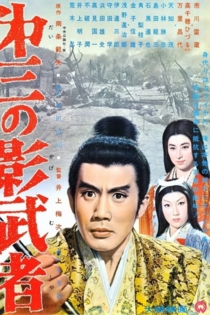
In the mountain regions of Hida, the dreams of a peasant named Kyonosuke, who longed to be a samurai, come true when he becomes one of three doubles, of shadows, of Lord Yasutaka. After months of intense and cruel training, he faces his destiny when the Lord and the other two shadows are killed in battle and he must take on the role of Lord Yasutaka....
The Third Shadow Warrior
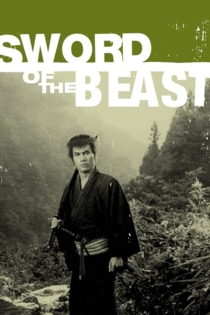
獣の剣
Hideo Gosha
Mikijiro Hira, Gō Katō
Legendary swordplay filmmaker Hideo Gosha's Sword of the Beast chronicles the flight of the low-level swordsman Gennosuke, who kills one of his ministers as part of a reform plot. His former comrades then turn on him, and this betrayal so shakes his sense of honor that he decides to live in the wild, like an animal. There he joins up with a motley group who are illegally mining the shogun’s gold, and, with the aid of another swordsman, gets a chance not just at survival but to recover his name and honor.
Sword of the Beast