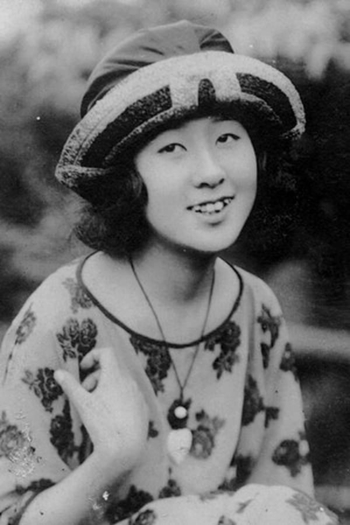
Yaeko Mizutani
1905 - 1979
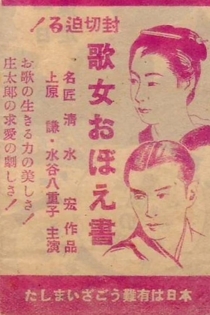
歌女おぼえ書
Hiroshi Shimizu
Yaeko Mizutani, Ken Uehara
Uta’s mother died when she was six years old; her father she never met. She was forced to adopt a traveller’s life when her grandmother died, and now she is a dancer and part of a family of actors who travel from town to town, setting up street performances. A way of escape from this marginal existence arises when she gets the chance to move to tea merchant Hiramatsu’s place, where she is asked to teach his daughter to dance.
Notes of an Itinerant Performer

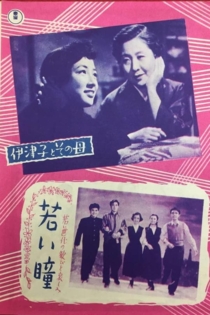
浪子
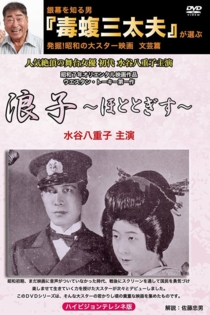
Eizo Tanaka
Yaeko Mizutani, Den Obinata
An early Japanese sound film, notable for being the only Japanese film ever to use the Western Electric Sound System. Contrary to most Western sources that give sole directing credit to Eizo Tanaka, it was actually co-directed by six different directors, Tanaka, Kazue Kimura, Kazuo Takimura, Ryoji Mikami and Hidekuni Ouchi.
Namiko
母待草
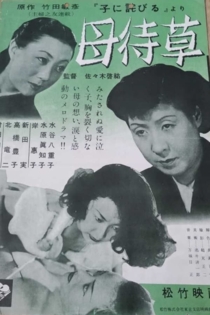
Keisuke Sasaki
Yaeko Mizutani, Machiko Mizuhara
Asako works in a hostel for troubled young women. When a beautiful young girl is brought in one day after committing theft, Asako finds out from the older widow she works with that the new girl is undoubtedly her half-sister. When the younger sister suddenly flees on account of a misunderstanding, Asako makes up her mind to find the mother who deserted them both.
Haha machi gusa
悪徳
Shin Saburi
Shin Saburi, Isao Kimura
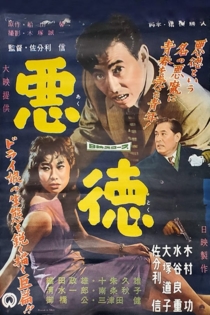
A movie adaptation of Funayama Kaoru's novel of the same name, which depicts the story of a modern youth who is attracted to the evil path. Saburi Shin, a well-known actor who also demonstrated his skill as a director in a bold social work, embodies a person with a complicated dilemma in a shadowy manner, and is a dramatic work that plays a part in the lead role.
Akutoku