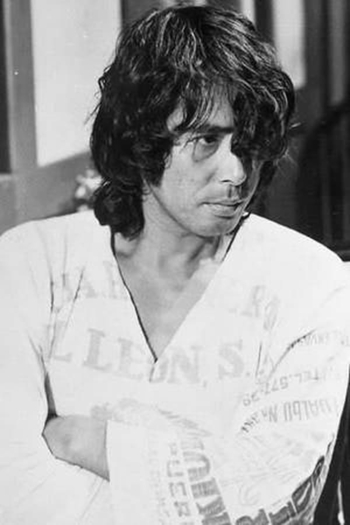
Yoshio Harada
1940 - 2011Description above from the Wikipedia article Yoshio Harada, licensed under CC-BY-SA, full list of contributors on Wikipedia.

Still Walking
Hirokazu Kore-eda
Hiroshi Abe, Kirin Kiki
Twelve years after their beloved eldest son, Junpei, drowned while saving a stranger's life, Kyohei and Toshiko welcome their surviving children home for a family reunion. Younger son Ryota still feels that his parents resent that he isn't the one who died; his new wife, Yukari, is awkwardly meeting the rest of the family for the first time. Daughter Chinami strains to fill the uncomfortable pauses with forced cheer.
Still Walking
犬笛
Sadao Nakajima
Bunta Sugawara, Kinya Kitaoji
In this crime thriller produced by Toshiro Mifune (who has a supporting role), hard-boiled Shiro Akitsu goes on a relentless search for his abducted 7-year old daughter, with the aid of an Ainu dog summoned by a whistle she gave him.
Dog Whistle

I Wish
Hirokazu Kore-eda
Koki Maeda, Oshiro Maeda
Twelve-year-old Koichi, who has been separated from his brother Ryunosuke due to his parents' divorce, hears a rumor that the new bullet trains will precipitate a wish-granting miracle when they pass each other at top speed.
I Wish
Tomorrow
Kazuo Kuroki
Kaori Momoi, Kaho Minami
On August 9, 1945, the Americans dropped an atomic bomb on Nagasaki. This film, based on a story by Mitsukaru Inoue, describes the daily life of people in Nagasaki the day before that fateful event. It presents the human drama of people's lives, and their feelings of joy and sadness. These include a newlywed couple, an expectant mother, and lovers who must say farewell because the boy is called to serve in the army. Each of these people, like others in the city, hoped to live with their dreams for ‘tomorrow’. But tomorrow never comes for them, as their lives are brought to an abrupt and unexpected end. Knowing how the story ends, in this case, doesn't detract from it at all; rather, it enhances the emotional impact, which is further heightened by the poignant musical score from Teizo Matsumura. 'Ashita' is the first film in Kazuo Kuroki's 'War Requiem Trilogy,' which also includes 'Utsukushii Natsu Kirishima' (2002) and 'Chichi to Kuraseba' (2004).
Tomorrow
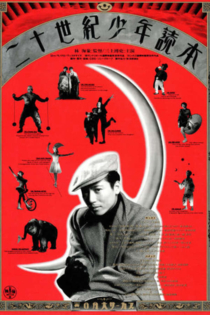
二十世紀少年読本
Kaizô Hayashi
Hiroshi Mikami, Moe Kamura
Two brothers, Jinta and Wataru, are raised in a travelling circus. After an accident, Jinta decides to leave the circus and travels the countryside working as a con-man. After a run-in with a local gang of yakuza, he is invited to join their ranks, where he makes the mistake of falling for a boss's mistress. Wataru stays with the circus and works hard to regain its former glory
Circus Boys
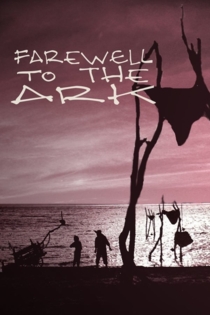
Farewell to the Ark
Shūji Terayama
Tsutomu Yamazaki, Mayumi Ogawa
A surreal, isolated village sees its inhabitants gradually leave behind their mutual traditions and superstitions as they leave for the city. Among them are two cousins who love each other and who get into a quarrel with other villagers.
Farewell to the Ark
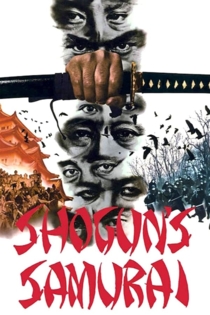
柳生一族の陰謀
Kinji Fukasaku
Kinnosuke Nakamura, Shin'ichi Chiba
Following the death of the second Tokugawa shogun, it is revealed that he was poisoned by retainers of his son Iemitsu in hopes of gaining him the shogunate despite the stammer and birthmark which undermine his respect. Iemitsu and his brother Tadanaga become bitter rivals for the shogunate, and the land is split into factions, eventually erupting into warfare. Iemitsu's mentor, his fencing instructor Yagyu, is fixated upon securing Iemitsu the shogunate and ends up betraying everyone, even his own family, in pursuit of the goal.
Shogun's Samurai
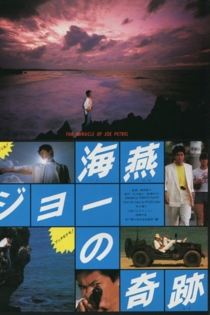
海燕ジョーの奇跡
Toshiya Fujita
Saburo Tokito, Miwako Fujitani
In Okinawa, a Japanese-Filipino gangster named Joe kills an Okinawan mobster. Joe temporarily escapes the pursuing mob by fleeing to the Philippines, hoping to find there safety and perhaps to link up with his father. He meets Yoko, a saloon girl, who looks after him, but soon Joe's enemies show up, determined to make Joe pay.
The Miracle of Joe, the Petrel
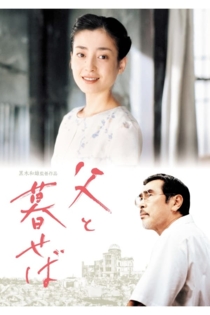
The Face of Jizo
Kazuo Kuroki
Rie Miyazawa, Yoshio Harada
Based on a play by Hisashi Inoue, it focuses on the sufferings of the survivors of Hiroshima. The film takes place during 4 days in the summer of 1948, as the ghost of her father visits Mitsué (Rié Miyama). He had somehow learned that she has fallen in love, and tries to convince her to start her new life. But Mitsué obstinately refuses his warm and humorous encouragements : « People were killed in my place. I do not have the right to find happiness », she says.
The Face of Jizo