Al St. John
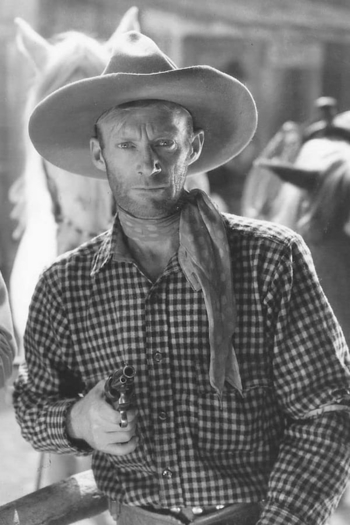
1893 - 1963Al St. John (September 10, 1893 – January 21, 1963) in his persona of Fuzzy Q. Jones basically defined the role and concept of "comical sidekick" to cowboy heroes from 1930 to 1951. St. John also created a character, "Stoney," in the first of a continuing Western film series, The Three Mesquiteers, that was later played (at a low point in his own career) by John Wayne.
Born in Santa Ana, California, St. John entered silent films around 1912 and soon rose to co-starring and starring roles in short comic films from a variety of studios. His uncle, Roscoe "Fatty" Arbuckle, may have helped him in his early days at Mack Sennett Studios, but talent kept him working. He was slender, sandy-haired, handsome and a remarkable acrobat.
St. John frequently appeared as Arbuckle's mischievously villainous rival for the attentions of leading ladies like Mabel Normand, and worked with Arbuckle and Charles Chaplin in The Rounders (1914). The most critically praised film from St. John's period with Arbuckle remains Fatty and Mabel Adrift (1916) with Normand.
The name Fuzzy originally belonged to a different actor, John Forrest “Fuzzy“ Knight, who took on the role of cowboy sidekick before St. John. As the studio first intended to hire Knight for the western series but then gave the role to St. John instead, he took on the nickname of his rival for his screen character.
In most of his films, screen time was set aside for St. John to do a sort of solo comedy act, emphasizing amazing pratfalls and acrobatics. He might "find" a bicycle on a fairground set, and do an astonishing sequence of acrobatic stunts on the cycle, or he might try to capture a rat, bat, skunk, gopher, or bug with hilarious and chaotic consequences. Another stunt which he used in nearly every Western was virtually his trademark: he would mount his horse in apparently the standard manner, but somehow wind up sitting facing backward, and often would ride off with the hero in this unusual orientation.
When Crabbe left PRC (according to interviews, in disgust at their increasingly low budgets), St. John was paired with new star Lash LaRue. Ultimately, St. John made more than 80 Westerns as Fuzzy. His last film was released in 1952. From that time on until his death in 1963 in Lyons, Georgia, he made personal appearances at fairs and rodeos, and travelled with the Tommy Scott Wild West Show. Altogether, Al St. John acted in 346 movies, spanning four decades from 1912 to 1952.
Description above from the Wikipedia article Al St. John, licensed under CC-BY-SA, full list of contributors on Wikipedia.
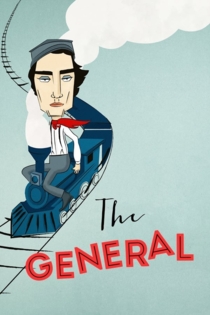
The General
Clyde Bruckman, Buster Keaton
Buster Keaton, Marion Mack
During America’s Civil War, Union spies steal engineer Johnny Gray's beloved locomotive, 'The General'—with Johnnie's lady love aboard an attached boxcar—and he single-handedly must do all in his power to both get The General back and to rescue Annabelle.
The General
Bright Lights
Roscoe 'Fatty' Arbuckle
Roscoe 'Fatty' Arbuckle, Mabel Normand
The manager of a small town hotel installs a cabaret in an attempt to achieve the standard set by restaurants in the large cities. His effort is ludicrous because of the fact that his talent is all recruited from the help in the hotel. Roscoe, the cook, is forced to appear in a dress suit and when Al St. John appears from the bar there is a lively rivalry between the two for the applause of the crowd. Mabel, the waitress, vies with a professional dancer from the city. Into this setting comes William Jefferson, a polished sharper, who takes the innocent Mabel by storm.
Bright Lights

Fire Away
Stephen Roberts
Al St. John, Jim Kelley
Nominally about attempts to steal a gold mine, the movie starts out with the air of a realistic comedy, then immediately descends into a series of perfectly timed gags which made me goggle at their improbability -- not the sort of thing you normally think of in a slapstick comedy. Very quickly the unerring ability of ropes to loop themselves around tree roots, stopping Al from plummeting to his death or an explosion to drop him on a bull came to make me goggle again.
Fire Away


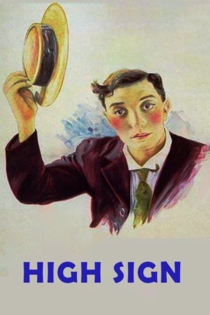
The High Sign
Buster Keaton, Edward F. Cline
Buster Keaton, Bartine Burkett
Buster is thrown off a train near an amusement park. There he gets a job in a shooting gallery run by the Blinking Buzzards mob. Ordered to kill a businessman, he winds up protecting the man and his daughter by outfitting their home with trick devices.
The High Sign