Nikolaus Geyrhalter
1972 (54 года)Elsewhere
Nikolaus Geyrhalter
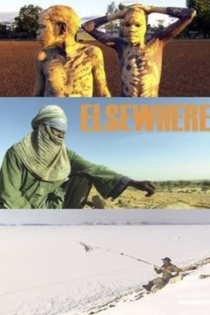
The year 2000, elsewhere. 12 months. 12 episodes. Weeks, days, single moments of different ways of life. Tradition and change. People of different cultural and geographical background. A film about their life. A journey through voices and sounds from elsewhere, with no commentary added. Landscapes, outlooks on the world, outlooks on life: Desert, snow, valley, jungle, ice, rainforest, stones, swamps, mountains, the sea, forests, a South-Sea atoll. An homage to humanity at the beginning of the 21st century.
Elsewhere
Das Jahr nach Dayton
Nikolaus Geyrhalter
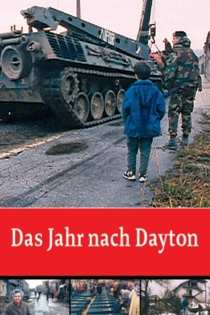
A portrait of the first year of peace in Bosnia. This is a human story played out before a background of a war which still makes itself felt, a story of a possible life together, which has on the other hand become impossible in many cases. Rajko, the Serbian mechanic and his family must leave their home for the second time. Nermin, the actor, lost both legs in the war and might have the chance to learn a new role. Halid, a shepherd from the Muslim-controlled region, risks his life to visit friends on the western (Croatian) side of Mostar.
The Year After Dayton
Über die Jahre
Nikolaus Geyrhalter
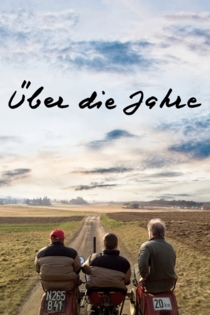
Taking the demise of a textile factory in Austria’s Waldviertel region as its starting point, with the antiquated manufacturing plant initially shown in full operation, this film poses the question of what work means for people’s self-image and character. After the factory goes bankrupt and closes, the filmmaker accompanies some of its employees as they continue to make their way, questioning them about their daily routines, the circumstances in which they live, about looking for work or the new jobs they find. One woman’s situation is precarious, but that doesn’t prevent her from bringing up her grandchildren. Another woman works here and there, flexible and resourceful. One man blossoms visibly in his newly unemployed state. Bit by bit, different aspects of their private lives and personal misfortunes emerge.
Over the Years
Unser täglich Brot
Nikolaus Geyrhalter
Claus Hansen Petz, Arkadiusz Rydellek
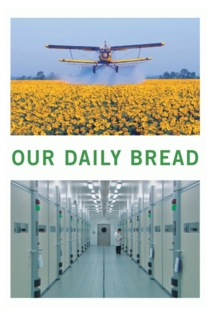
Welcome to the world of industrial food production and high-tech farming! To the rhythm of conveyor belts and immense machines, the film looks without commenting into the places where food is produced in Europe: monumental spaces, surreal landscapes and bizarre sounds - a cool, industrial environment which leaves little space for individualism.
Our Daily Bread
Pripyat
Nikolaus Geyrhalter
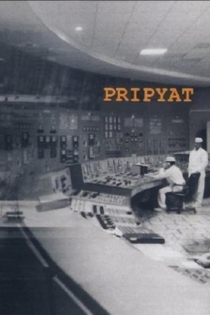
After the catastrophe in 1986, a 30-km restricted zone was erected around the Chernobyl nuclear power plant, and 116,000 persons were evacuated from this area. Pripyat is a portrait of the people who still live and work there, and of those who have moved back. What is life like for these people, a life with the invisible and incomprehensible danger of radioactivity? How do they deal with the aftereffects of an accident which is claimed to be statistically improbable? Four protagonists tell their stories and provide a look at everyday life in “their“ zone.
Pripyat
Angeschwemmt
Nikolaus Geyrhalter
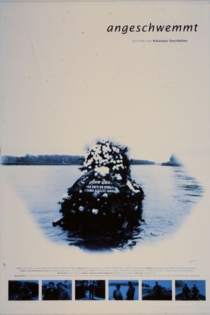
Life on the Danube is essentially determined by two factors: the river itself and the often strange idiosyncrasies of the people who live along its banks. And they are multifarious: fishermen and graveyard wardens, Buddhist monks, allotment holders on Danube Island, stranded shippers, tramps and soldiers. All linked by the great current against which they swim.
Washed Ashore
Abendland
Nikolaus Geyrhalter
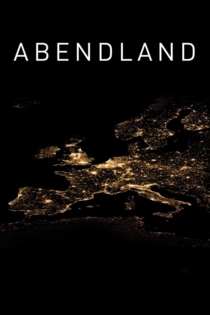
Some things can be seen more clearly at night.. . A film poem about a continent at night, a culture on which the sun’s going down, though it’s hyper alert at the same time, an “Abendland” that, often somewhat self-obsessively, sees itself as the crown of human civilization, while its service economy is undergoing rapid growth in a thoroughly pragmatic way. Nikolaus Geyrhalter takes a look at a paradise with a quite diverse understanding of protection. Night work juxtaposed with oblivious evening digression, birth and death, questions that await answers in the semi-darkness, a Babel of languages, the routine of the daily news, and political negotiation: All this has been captured in images with a wealth of details that make us look at things in a new way. The longer you consider a word, the more distant is its return gaze: ABENDLAND.
Abendland
Die bauliche Maßnahme
Nikolaus Geyrhalter
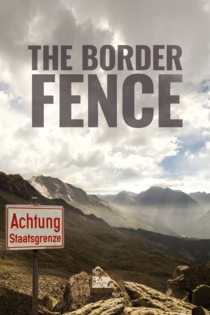
Brenner Pass, Alpine border, spring 2016: the Austrian government announces the construction of a border fence, expecting a shift of the refugee routes to Italy after the Balkan route is closed. The residents fear the fence just as much as the supposedly threatening influx of foreigners to their homeland. Two years later, the fence is still rolled up in a container, as the inrush of refugees never occurred.
The Border Fence
Homo Sapiens
Nikolaus Geyrhalter
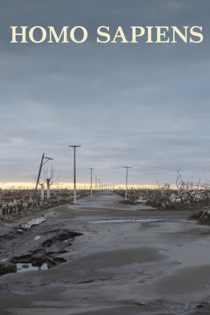
HOMO SAPIENS is visionary documentarian Nikolaus Geyrhalter's exploration of the finiteness and fragility of human existence, the end of the industrial age, and what it means to be a human being. What will remain of our lives after we're gone? Empty spaces, ruins, cities, increasingly overgrown with vegetation, crumbling asphalt: the areas we currently inhabit, now abandoned and decaying, gradually reclaimed by nature. Comprised of a succession of eerily depopulated, dystopian landscapes from across the world, HOMO SAPIENS offers an at once mesmerizing and chilling vision of what a posthuman future might look like.
Homo Sapiens
7915 Km
Nikolaus Geyrhalter
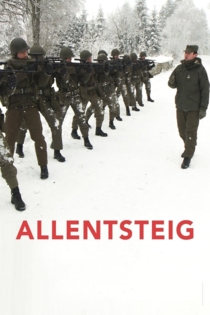
A motor-sports spectacle that kicks up plenty of dust. On the trail of the 2007 Dakar Rallye ‘7915 KM’ undertakes a search, along the way encountering the variety to be found in Africa’s present in Morocco, Sahrawi Republic, Mauritania, Mali and Senegal. ‘7915 KM’ demonstrates the extent of this distance, which is the result of political and economic conditions, and also the ideas and prejudices to be found in both Europe and Africa. It also makes the closeness tangible, which becomes clear in the stories of everyday life, work, hopes and worries. Keeping the sobering reality in mind, it creates an homage to humanity and slowness which questions deep-seated perceptions and the role of Europeans in numerous, presumably African, problems.
7915 Km
Cinema Austria - Die ersten 112 Jahre
Frederick Baker
Michael Haneke, Ulrich Seidl
This historical and analytical documentary draws attention to the background of the roots of "New Austrian Cinema" and presents Austria as a film country to be taken seriously. The audience gets to see rare early works by well-known filmmakers as well as shots of landscapes that served as a source of inspiration and locations that have produced important Austrian films since the end of the 19th century.
Cinema Austria, the first 112 Years

Temelin. Ein Dorf in Südböhmen
Markus Glaser, Wolfgang Widerhofer
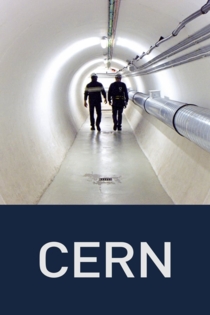
In January 2002 the Temelín nuclear power plant, which is located in the Czech Republic less than 50 kilometers from the Austrian border, went into trial operation. This film attempts to calmly and objectively present a different Temelín: the village of the same name which lies in the romantic hills of southern Bohemia with its 300 residents. Not all of them view the power plant with enthusiasm, but here the pros and cons are not based on the arguments of the media - people have developed their own strategies for life with “their“ power plant.
Temelin