Lech Kowalski
2021East of Paradise
Lech Kowalski
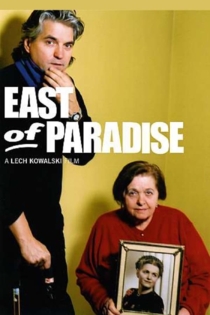
Filmmaker Lech Kowalski explores his belief that struggle is "the epitome of living" in this documentary which compares the wildly different life experiences of himself and his mother. Kowalski's mother came of age in Poland during the early stages of World War II, and after failed attempts to outrun both Nazi and Russian forces she and her family were sent to a Soviet concentration camp, where inmates were tortured, mistreated, and starved to the point where some ate their own lice in a desperate struggle to survive. Kowalski also depicts his own self-inflicted season in hell during his years on the New York City punk rock scene as he wallowed in the sordid underbelly of drug addiction, pornography, prostitution, and streetwise decadence. On both stories, Kowalski finds a message of hope and strength in the midst of almost certain peril.
East of Paradise
Born to Lose: The Last Rock and Roll Movie
Lech Kowalski
Johnny Thunders, Dee Dee Ramone
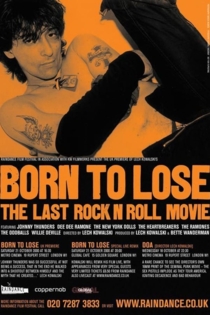
Veteran documentary filmmaker and hipster Lech Kowalski creates this film about his friend and hard-partying rock god Johnny Thunders, member of legendary proto-punk band the New York Dolls. Through archive footage and interviews with such musicians as Dee Dee Ramone and Sylvain Sylvain, the film details his stint with the Dolls, the formation of his other band, the Heartbreakers; his rise to fame, particularly in Japan; his descent into heroin addiction, and the mysterious circumstances of his death.
Born to Lose: The Last Rock and Roll Movie
On Hitler's Highway
Lech Kowalski
Lech Kowalski travels the oldest highway in Poland, built by Hitler as an invasion route to the east. As the road literally crumbles into history he discovers that it is now a vital link to the west and encounters people and locations that connect it to the present. A hooker from Bulgaria under an umbrella scared her pimp may show up and see that business is horrible in the rain. A one legged man in a wheel chair selling mushrooms in the tornado like wake of speeding trucks describing the best way to cook what he sells. Destitute Ukrainians hiding on a former Warsaw Pact Nuclear air base serve tea to a former cop still patrolling the property. Young people escaping the glare of reality in underground bunkers built by the Nazis. Bombed out ruins still guarding stretches of the concrete road. Gypsies on a pilgrimage in Auschwitz twist the plot and suddenly we are in a candle lit hut, in a gypsy village listening to a man describe how he lost his father to the Holocaust.
On Hitler's Highway
The End of the World Begins with One Lie
Lech Kowalski
"I deconstructed Flaherty’s film. Rearranged the order and changed the context of his scenes and used the music in many different ways even rearranging the music. His film gives the narrative structure to my film. Without it I could not have made The End Of The World Begins With A Lie. The End Of The World Begins With A Lie is about history. It is about the lie’s that we have been told and are continually being told in order to sell an ideology and material goods that we all want and need."
The End of the World Begins with One Lie
Rock Soup
Lech Kowalski
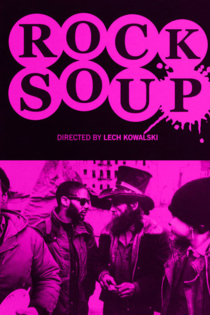
It's the summer of 1989 in New York's Lower East Side. Homeless people have turned Tompkins Square Park into a tent city. On a nearby corner lot deeper in Alphabet City, where punk became famous and Allen Ginsburg wrote much of his poetry, a bunch of people try to make a soup kitchen work. They scrounge their food supplies from restaurants, fish markets and dumpsters. They build fires in the dirt and cook on old sewer grates. However the authorities threaten to close down the soup kitchen. The impeccably constructed black and white images give a view of the pre Disneyfication of New York City in this amazing work from filmmaker Lech Kowalski.
Rock Soup
Holy Field Holy War
Lech Kowalski
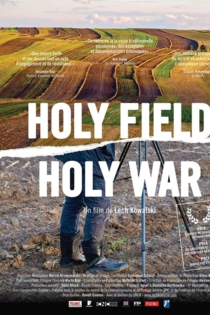
Film art as a vehicle for denounce. This time, documentary film maker Kowalski chooses the seemingly quiet Polish landscape, a land chosen for gas drilling, making a careful examination through a cautious revision of the tracks left on the fields and the sincere confessions of discontentment of the farmers who witnessed the terrifying consequences of the intervention of great international corporations in the fields of Poland. The landscape in this resource-exploited land is infested by an invisible menace. With a special interest in the gaze of the oppressed, Kowalski delivers a somehow melancholic film, revealing a declaration of love to the land and nature before they go into oblivion.
Holy Field Holy War
Hey! Is Dee Dee Home?
Lech Kowalski
Dee Dee Ramone, Johnny Thunders
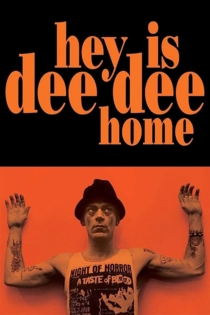
Punk rock devotees will welcome director Lech Kowalski's reflective video portrait of late bassist Dee Dee Ramone and his life as a music industry icon -- including his self-destructive bouts with heroin. The centerpiece of the hourlong documentary -- which is peppered with vintage performance clips -- is a 1991 interview with a clean Dee Dee, who talks at length about his storied career and penchant for living on the edge.
Hey! Is Dee Dee Home?
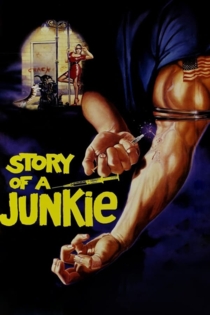
The Boot Factory
Lech Kowalski
‘Imagine if the Sex Pistols made boots instead of music’, says director Kowalski of a group of Cracow punks who make leather shoes for a living. They run their business as if they were a band of rock stars, living by their own rules, making the product by hand, heads bobbing in unison to their favourite bands. Kowalski’s roots in American underground cinema make him the perfect interpreter of the punk aesthetic.
The Boot Factory
On va tout péter
Lech Kowalski
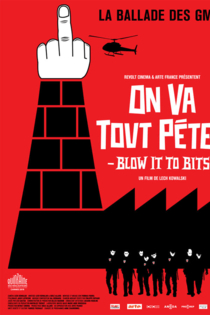
A mix of Rock and Roll and Blues are the secret for successful rebellion. When I took my camera to the middle of France where the GM&S factory was threatened by a permanent shut down, I felt like something extraordinary was about to take place. And it did. The lyrics were written by workers who have had enough! The tune was composed by people not afraid to go against even the rules of revolt! The volume was loud enough to attract the media. Their working-class concert spread across France like wild fire. I sat out of sight, camera in hand, filming like catching fish in a barrel.
Blow It to Bits
C’est Paris aussi
Lech Kowalski
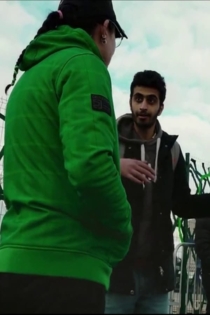
Lech Kowalski has gotten us used to movements for a long time now. Movements of the street, of punks, of fetishists, of his mother, of Polish farmers, of strikers: the list is long, it is the almost endless inventory of a demoted humanity. But is it a habit? Definitely not, more like the effect of a camera that remains untamed. And here we are, subjected to its kicks, its tricks, its rebellions, its rages, its heartfelt cries, we are blown away, and it exhilarates our souls. Once again, the idea is simple: to remake An American in Paris. One small point though, this time the American will be a Native American, sporting a baseball cap with the slogan “Native pride” on it; and Paris will be the rough areas along the roads of the capital, busy with homeless people and migrants from all around the world.
This Is Paris Too