
María Izquierdo
1960 (65 лет)
Bahía azul
Nicolás Acuña
Antonio Campos, María Izquierdo
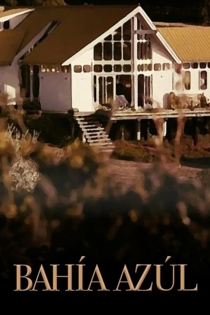
A teenager visits his mother in search of affection. She lives semi isolated from the world, on a house facing the sea and in the company of a woman. The meeting of both characters will be rather a disagreement that will throw the young man towards other characters that will be moving further away from his mother until he disappears. Only at that moment will she feel the weight of his absence.
Bahía azul
Machuca
Andrés Wood
Matías Quer, Ariel Mateluna
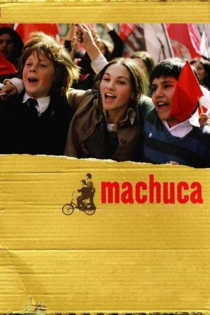
Santiago, capital of Chile during the Marxist government of elected, highly controversial president Salvador Allende. Father McEnroe supports his leftist views by introducing a program at the prestigious "collegio" (Catholic prep school) St. Patrick to allow free admission of some proletarian kids. One of them is Pedro Machuca, slum-raised son of the cleaning lady in Gonzalo Infante's liberal-bourgeois home. Yet the new classmates become buddies, paradoxically protesting together as Gonzalo gets adopted by Pedro's slum family and gang. But the adults spoil that too, not in the least when general Pinochet's coup ousts Allende, and supporters such as McEnroe.
Machuca
Coronación
Silvio Caiozzi
Julio Jung, Boris Quercia
The elderly heir of a formerly wealthy and respected Chilean family, Andres, suffers from decadence and solitude. He hires young Estela in order to look after his tiranic and almost crazy grandmother. The differences in class and age don't stop Andres from courting Estela, whose fiancé Mario tries to make some money with the passions of his well-off rival. The suffocating atmosphere of the run-down mansion in the outskirts of Santiago represents the deterioration of the bourgeoisie, and sets the scene for the total collapse of Andres.
Coronation



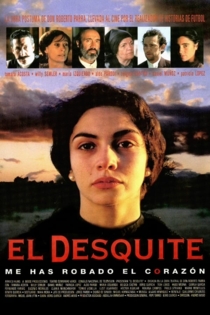
El desquite
Andrés Wood
Tamara Acosta, Willy Semler
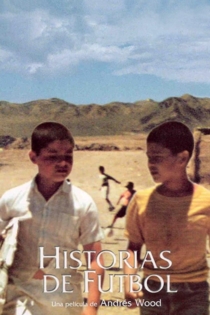
A small house is devastated by the irrepressible force of the Ñuble river. Anita is rescued from the riverbank while her parents disappear into the water. She is given in adoption to her godparents, who can not keep her, they turn her over to a large hacienda in the area, where the little one will be the companion of the sickly patron, Lucia. When the owner of the hacienda dies, Anita, disregarding the advice of the other servants, stays to serve the boss, Don Pablo. She is already a woman and he is a single man. A strong attraction emerges between the two. This sad story of love and revenge as strong and uncontrollable as the overflowing waters of the Ñuble River.
Revenge

La fiebre del loco
Andrés Wood
Tamara Acosta, Mariana Loyola
When the Chilean officials lift the ban on harvesting the shellfish "el loco" (which purportedly is an aphrodisiac) in the seaside village of Puerto Gala greed and lust take hold. Greed is embodied by Carlos Maldonato, "El Canuto," who attempts to buy all of the shellfish for a Japanese company, and by a traveling band of prostitutes that accompany the influx of fishermen. El Canuto also wrangles to get into good stead with an old flame, Sonia, who is now the proprietor of "La Pincoya," a local restaurant. But "el loco" proves more effective, and more damaging, than anyone could have guessed.
Loco Fever
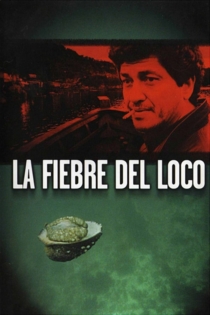
Imagen latente
Pablo Perelman
Bastián Bodenhöfer, María Izquierdo
In the late 1980s, a politically neutral photographer in Pinochet's Chile is still struggling to come to terms with the "disappearance" of his activist brother in the Villa Grimaldi torture centre back in 1975.
Latent Image

Fuga
Pablo Larraín
Benjamín Vicuña, Gastón Pauls
Could a brilliant composer's music actually be killing his loved ones? Eliseo can't help but believe it when his younger sister dies tragically and then his pianist Georgina suddenly dies on the piano. Completely traumatized, Eliseo is taken to a mental hospital where he can find escape only through music.
Fuga


El verano de los peces voladores
Marcela Said
Gregory Cohen, Francisca Walker
Manena is the headstrong adolescent daughter of Pancho, a rich Chilean landowner who devotes his vacation to one thing : the invasion of his artificial lagoon by carps. While he employs increasingly radical methods, Manena has her first romantic experiences and hearbreak - and discovers a silent world in the shadow of her own : that of the Mapuche Indians who demand access to the land and clash with her father.
The Summer of Flying Fish