Margareth Clémenti
2021Chromo sud
Étienne O'Leary
Anne-Marie, Michel Auder
One of the very few films made by Etienne O'Leary, all of which emerged from the French underground circa 1968 and can be very loosely designated 'diary films.' Like the contemporaneous films by O'Leary's more famous friend Pierre Clementi, they trippily document the drug-drenched hedonism of that era's dandies. O'Leary worked with an intoxicating style that foregrounded rapid and even subliminal cutting, dense layering of superimposed images and a spontaneous notebook type shooting style. Yet even if much of O'Leary's material was initially 'diaristic,' depicting the friends, lovers, and places that he encountered in his private life, the metamorphoses it underwent during editing transformed it into a series of ambiguously fictionalized, sometimes darkly sexual fantasias. - Experimental Film Club
Chromo sud

Homeo
Étienne O'Leary
Michèle Giraud, Yves Beneyton
Homeo is a mental construction made from visual reality, just as music is made from auditive reality. I put in this film no personal intentions. All my intentions are personal. I’ve made this film thinking of what the audience would have liked to see, not something specific that I wanted to say: what the film depicts is above all reality, not fiction. Homeo is, for me, the search for an autonomous cinematographic language, which doesn't owe anything to traditional narrative, or maybe everything. Cinema is, above all, part of a way of life which will become more and more self-assured in the years and century to come. We are part of this change, and that’s why I tried in Homeo to establish a series of perpetual changes, in constant evolution or regress, which tries, above all, to focus on things.
Homeo
Positano
Pierre Clémenti
Tina Aumont, Pierre Clémenti
Positano is an island of the Amalfi Coast that Neptune would have, according to legend, created for the love of a nymph. Perched on the rocks of the island, the house of Frédéric Pardo and Tina Aumont became in 1968 a meeting place for the underground community. Pierre Clémenti stays there for a while and makes images of dazzling sensuality. Beyond Pierre Clémenti's intimate love of these faces and bodies often naked in this Mediterranean landscape, the film reveals the moving beauty of a utopia where living together could still be achieved in a territory of sharing and permanent creation. Flow of perceptions of consciousness, visual impressions, physical impregnations, the work of Pierre Clémenti is an ode to sensuality and "life-cinema".
Positano




La deuxième femme
Pierre Clémenti
Tina Aumont, Balthazar Clémenti
Over the course of more than fifteen years, Clémenti films a series of intimate diaries, starting from daily encounters. In La deuxième femme, we see Bulle Ogier and Viva, Nico and Tina Aumont, Philippe Garrel and Udo Kier, a performance by Béjart, a piece by Marc’O, concerts by Bob Marley and Patti Smith (not always recognisable)... It’s like a maelstrom of psychedelic images that are passed through a particle accelerator.
La deuxième femme

L'invenzione di Morel
Emidio Greco
Giulio Brogi, John Steiner
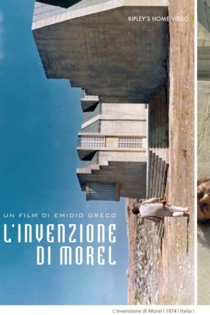
A castaway arrives on an island. He thinks it's uninhabited, but he sees a palace with also a hidden room. Soon he sees some people walking, dressed with old-fashioned clothes. He is afraid because people don't see him, like a ghost.
Morel's Invention
Arabian Nights
Pier Paolo Pasolini
Ninetto Davoli, Franco Citti
The final part of Pasolini's Trilogy of Life series is rich with exotic tales of slaves and kings, potions, betrayals, demons and, most of all, love and lovemaking in all its myriad forms. Mysterious and liberating, this is an exquisitely dreamlike and adult interpretation of the original folk tales.
Arabian Nights


La révolution n'est qu'un début. Continuons le combat.
Pierre Clémenti
Tina Aumont, Yves Beneyton
Half family photo album, half ciné-tract, the film was shot in Paris during the events of May ‘68 and in Rome where the actor was featuring in the film Partner by Bertolucci. Rediscovered in a basement in 1999, this silent film appears to be one of Clémenti’s most purely beautiful and concentrated works, at times recalling Brakhage and Eisenstein. - MUBI
The Revolution Is Only a Beginning. Let's Continue Fighting.

Nel regno di Napoli
Werner Schroeter
Liana Trouche, Antonio Orlando
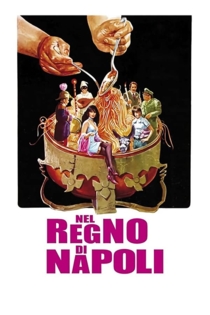
Cahiers du cinéma critic Serge Daney asks whether The Kingdom of Naples is "leftist fiction, kitschy melodrama, photo-roman, a decadent chronicle of a city, opera in a minor key, or simply the first realistic narrative film by Schroeter?" It is all of these and more: an epic chronicle of proletarian family life in Naples from 1943 to 1972 that brilliantly captures the wretched poverty, overwrought passions, and political, religious and economic upheavals of Sicily across two generations. Schroeter assimilates neorealist aesthetics and class sympathies with the tempestuous excesses of popular melodrama, borrowing freely from Rossellini, Pasolini, Visconti, Brecht, and Rossini. (Facets)
The Kingdom of Naples
Weisse Reise
Werner Schroeter
Jim Auwae, Tilly Soffing
One of Werner Schroeter's most important and inventive works, this threadbare evocation of Jean Genet's notorious Querelle depicts the erotic adventures of two sailors through the world's seaports in the manner of a cut-rate silent movie.
White Journey

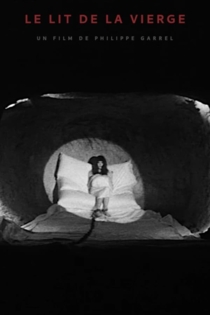
Le Lit de la vierge
Philippe Garrel
Zouzou, Pierre Clémenti
30 year old child enters the new city, riding on a donkey. He says he is the Savior. He has spent no time among men. He is trembling with cold. His clothes are soaked. His mother was overprotective ; his father conspicuously absent. He knows that he must face the mockery, refusal, ignorance and blindness of the men around him. They travel in gangs, in large numbers : soldiers, mercenaries or the like, on majestic, imposing horses. Everything is out of proportion to his thin, bewildered, innocent body ; he is the madman of the new city...
The Virgin's Bed
Je, Tu, Elles...
Peter Foldès
Jacqueline Coué, Monique Lejeune
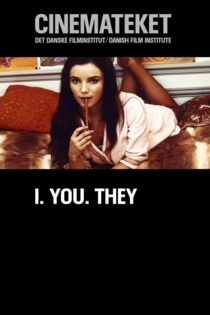
Little did this pretty brunette know when she applied for a babysitting job that her employer was an artist and that everything at his place differed from the outside world. What struck her the most was to find out that her boss had shrunk his wife and kept her in the fridge in order, as he said, to keep her safe from a hostile world!
I. You. They.