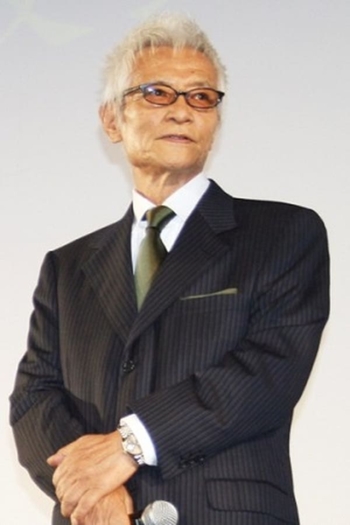
Ken Ogata
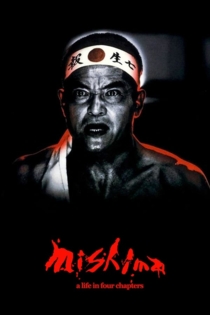
1937 - 2008Ogata was born in Tokyo, Japan. Ogata is well known for his roles in Peter Greenaway's The Pillow Book, Paul Schrader's Mishima: A Life in Four Chapters and Shohei Imamura's The Ballad of Narayama. He won the award for best actor at the 26th Blue Ribbon Awards for Okinawan Boys.
In television, his starring role as Toyotomi Hideyoshi in the 1965 NHK Taiga drama Taikōki catapulted him to fame. Ken went on to many prominent roles in subsequent programs. The following year, he portrayed Benkei in Minamoto no Yoshitsune. The network tapped him again for the role of Fujiwara no Sumitomo in the 1976 Kaze to Kumo to Niji to. He returned to playing Hideyoshi in the 1978 Ōgon no Hibi, and returned to the lead as Ōishi Kuranosuke in Tōge no Gunzō, the 1982 Chūshingura. Another featured appearance in a Taiga drama was in Taiheiki (1991, as Ashikaga Sadauji, father of Takauji).
Mr. Ogata died on October 5, 2008, just days after finishing his role in the production of the Fuji TV drama "Kaze no Garden" (Garden of the Winds), filmed in the rural Furano area of northern Japan. In his final role, Ogata, himself 71 years of age, played a doctor involved in the end-of-life care of elderly patients.
His sons Kanta and Naoto Ogata are actors. NHK selected Naoto for the starring role of Oda Nobunaga in the 1992 Taiga drama Nobunaga King of Zipangu; Kanta played Inaba Masakatsu in Aoi Tokugawa Sandai (2000).
Description above from the Wikipedia article Ken Ogata, licensed under CC-BY-SA, full list of contributors on Wikipedia
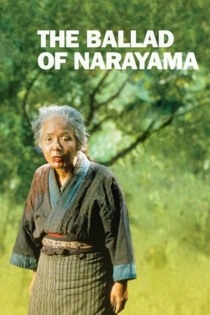
The Ballad of Narayama
Shōhei Imamura
Ken Ogata, Sumiko Sakamoto
In a small village in a valley everyone who reaches the age of 70 must leave the village and go to a certain mountain top to die. If anyone should refuse they would disgrace their family. Old Orin is 69. This winter it is her turn to go to the mountain. But first she must make sure that her eldest son Tatsuhei finds a wife.
The Ballad of Narayama
The Hidden Blade
Yoji Yamada
Masatoshi Nagase, Takako Matsu
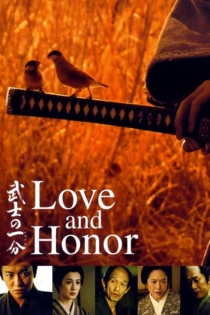
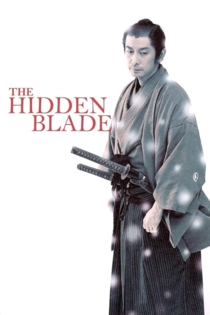
Set in 19th Century Japan a young samurai who finds himself in love with a farm girl leaves his home to begin a new life. He has to take stock of his new life when he is put to the test and ordered to kill a traitor who just happens to be his dearest friend.
The Hidden Blade
The Last Samurai
Kenji Misumi
Hideki Takahashi, Ken Ogata
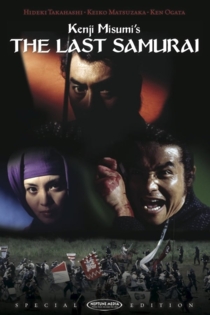
The film follows the story of Sugi Toranosuke, a ronin, who returns to his home town of Edo many years after his attempted suicide as a sickly child. Rescued and adopted by a master swordsman, he has grown into a master swordsman and a very kind gentleman. The time is around 1868 the year that the nails were finally put into the coffin containing the feudal system that nurtured and sustained the samurai. Sugi is confused and unsure about what is happening but his teacher wants him out of the chaos of the multiple power struggles between the various clans.
The Last Samurai
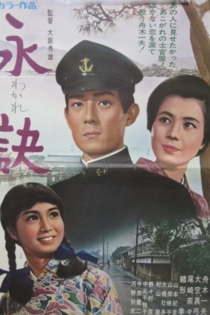
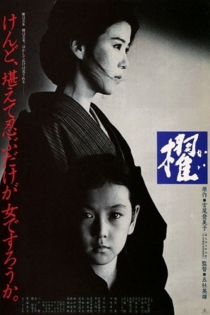
永訣
Hideo Oba
Kazuo Funaki, Mayumi Ôzora
During the early days of the war a young student, Makito (Kazuo Funaki), falls in love with Yuko (Mayumi Ozora), the widow of a naval officer. She, however, is living with the memories of her husband and it is her younger sister, Yumiko (Nana Ozaki), who grows fond of the student. Then, one day, a young naval officer, Tadayuki (Ken Ogata), a friend of her late husband, comes to see the widow and she becomes attracted to him. Though Makito is inspired to study for the navy, he is much upset when he learns that Yuko and Tadayuki are to marry.
Farewell, My Beloved
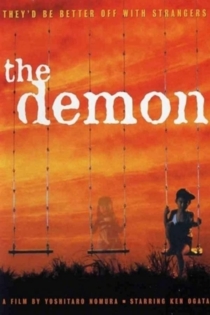
The Demon
Yoshitaro Nomura
Shima Iwashita, Ken Ogata
When Sokichi stops providing his long-time lover Kikuyo enough money to pay for the care of their three young children, Kikuyo leaves the children with Sokichi - and his very surprised and angry wife Oume - and disappears.
The Demon
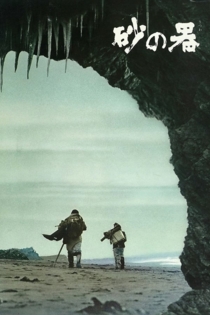
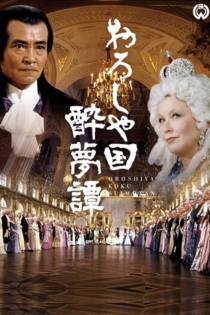
おろしや国酔夢譚
Jun'ya Satô
Ken Ogata, Toshiyuki Nishida
Sumptuous filming of the journey of a shipwrecked Japanese expedition from the Pacific Ocean across Siberia to the court of Catherine the Great of Russia. A Russo-Japanese co-production of a unique event in history which was the hit of Cannes and other film festivals but did not receive wide distribution despite its huge scope, high production values, and very human story of culture clash.
The Dream of Russia
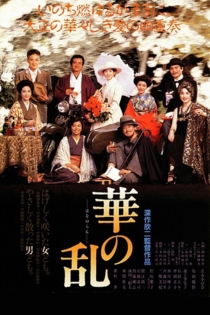
華の乱
Kinji Fukasaku
Ken Ogata, Sayuri Yoshinaga
Set in the Taisho era, which might be regarded as Japan's Hippie Phase, Hana no ran is a story about fashionable people without impulse control. Much of the action centers on a popular woman writer, the real-life poet Akiko Yosano, and her experiences among the literati of early 20th century Japan. Because of her independent, anti-war and often erotic poetry, she was a lightning rod for revolutionaries and other extremists, many of whom were destined to glamorous, yet ultimately pointless, deaths. The closest parallels might be the Byron/Shelley group or the people drawn to the Beat Generation.
A Chaos of Flowers
蝉しぐれ
Mitsuo Kurotsuchi
Matsumoto Kōshirō X, Yoshino Kimura
A young samurai stuck at the bottom of the hierarchical order attempts to rescue his childhood sweetheart from an evil clan lord after learning of a plot to kill her and her infant child. Bunshiro Maki is a skilled swordfighter who's lethal with a blade, yet still can't rise through the ranks of the system. After his father is accused of plotting against his clan and forced to commit ritual suicide, his longtime love Fuku is sent to Edo to become the clan lord's concubine. A few years later, Fuku has bore the clan lord a son. When Maki learns that the clan has hatched a plan to kill Fuku and her son to secure succession to the throne, he recruits two childhood friends to help thwart the diabolical plot.
The Samurai I Loved

女衒
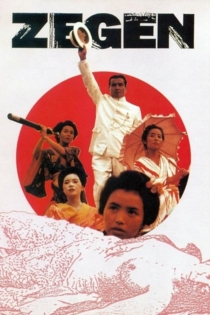
Shōhei Imamura
Ken Ogata, Mitsuko Baisho
At the time between the World Wars, Japan is involved in empire-building throughout East and Southeast Asia. After a brief career as a low-level military adventurer, Iheiji sets up chains of brothels throughout Asia. As Japan's power in the region grows, so does Iheiji's prosperity and patriotism.
Zegen