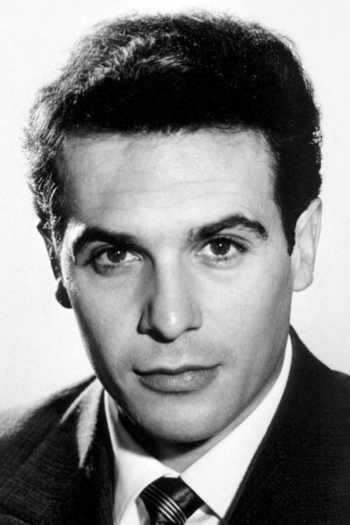
Francisco Rabal
1926 - 2001Francisco Rabal (March 8, 1926 – August 29, 2001), perhaps better known as Paco Rabal, was a Spanish actor born in Águilas, a small town in the province of Murcia, Spain.
In 1936, after the Spanish Civil War broke out. Rabal and his family left Murcia and moved to Madrid. Young Francisco had to work as a street salesboy and in a chocolate factory. When he was 13 years old, he left school to work as an electrician at Estudios Chamartín.
Rabal got some sporadic jobs as an extra. Dámaso Alonso and other people advised him to try his luck with a career in theater.
During the following years, he got some roles in theater companies such as Lope de Vega or María Guerrero. It was there that he met actress Asunción Balaguer; they married and remained together for the rest of Rabal's life. Their daughter, Teresa Rabal, is also an actor.
In 1947, Rabal got some regular jobs in theater. He used his full name, Francisco Rabal, as stage name. However, the people who knew him always called him Paco Rabal. (Paco is the familiar form for Francisco.) "Paco Rabal" became his unofficial stage name.
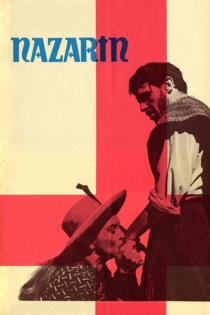
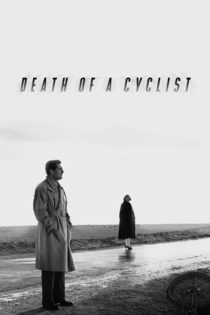
During the 1940s, Rabal began acting in movies as an extra, but it was not until 1950 that he was first cast in speaking roles, and played romantic leads and rogues. He starred in three films directed by Luis Buñuel - Nazarín (1959), Viridiana (1961) and Belle de jour (1967).
William Friedkin thought of Rabal for the French villain of his 1971 movie The French Connection. However, he could not remember the name of "that Spanish actor". Mistakenly, his staff hired another Spanish actor, Fernando Rey. Friedkin discovered that Rabal did not speak English or French, so he decided to keep Rey. Rabal has previously worked with Rey in Viridiana. Rabal did, however, work with Friedkin in the much less successful but Academy Award-nominated cult classic Sorcerer (1977), a remake of The Wages of Fear (1953).
Throughout his career, Rabal worked in France, Italy and Mexico with directors such as Gillo Pontecorvo, Michelangelo Antonioni, Luchino Visconti, Valerio Zurlini, Jacques Rivette and Alberto Lattuada.
It is widely considered that Rabal's best performances came after Francisco Franco's death on 1975. In the 1980s, Rabal starred in Los santos inocentes, winning the Award as Best Actor in Cannes Film Festival, in El Disputado Voto del Señor Cayo and also in the TV series Juncal. In 1989, he was a member of the jury at the 39th Berlin International Film Festival. In the 1999 he played the character of Francisco Goya in Carlos Saura Goya en Burdeos, winning a Goya Award as Best Actor.
Francisco Rabal is the only Spanish actor to have received a honoris causa doctoral degree from the University of Murcia.
Rabal's final movie was Dagon, a film which was dedicated to him right before the credits. The dedication read "Dedicated to Francisco Rabal, a wonderful actor and even better human being."
Rabal died in 2001 from compensatory dilating emphysema, while on an airplane travelling to Bordeaux, when he was coming back from receiving an Award at Montreal Film Festival.
Description above from the Wikipedia article Francisco Rabal, licensed under CC-BY-SA, full list of contributors on Wikipedia.
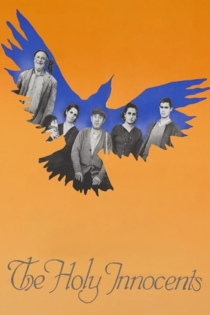
The Holy Innocents
Mario Camus
Alfredo Landa, Terele Pávez
Somewhere in the spanish country, in the 60s. Paco and his wife Régula are very poor. They work as tenant farmers for a very wealthy landowner. They have 3 children. One is backward. The others can not got to school because the master "needs" their work. When Regula's brother is fired from where he has worked for 61 years, he settles down at their little place... An attack against the archaism of the spanish country of the 60s.
The Holy Innocents
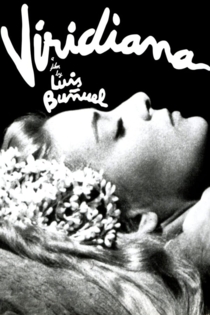
Viridiana
Luis Buñuel
Silvia Pinal, Francisco Rabal
Viridiana is preparing to start her life as a nun when she is sent, somewhat unwillingly, to visit her aging uncle, Don Jaime. He supports her; but the two have met only once. Jaime thinks Viridiana resembles his dead wife. Viridiana has secretly despised this man all her life and finds her worst fears proven when Jaime grows determined to seduce his pure niece. Viridiana becomes undone as her uncle upends the plans she had made to join the convent.
Viridiana
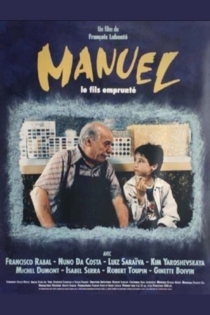
Manuel, le fils emprunté
François Labonté
Francisco Rabal, Nuno Da Costa
Juan Alvarez, a Spanish refugee in Canada, shoemaker, picks up at his home Manuel, a 12-year-old Portuguese teenager, whom he teaches to read, to assert his rights and who speaks of the Spanish civil war.
Manuel, le fils emprunté
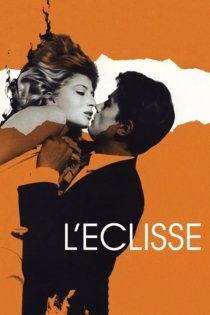
L'Eclisse
Michelangelo Antonioni
Alain Delon, Monica Vitti
This romantic drama by Michelangelo Antonioni follows the love life of Vittoria, a beautiful literary translator living in Rome. After splitting from her writer boyfriend, Riccardo, Vittoria meets Piero, a lively stockbroker, on the hectic floor of the Roman stock exchange. Though Vittoria and Piero begin a relationship, it is not one without difficulties, and their commitment to one another is tested during an eclipse.
L'Eclisse
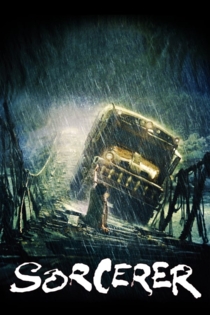
Sorcerer
William Friedkin
Roy Scheider, Bruno Cremer
Four men from different parts of the globe, all hiding from their pasts in the same remote South American town, agree to risk their lives transporting several cases of dynamite (which is so old that it is dripping unstable nitroglycerin) across dangerous jungle terrain.
Sorcerer

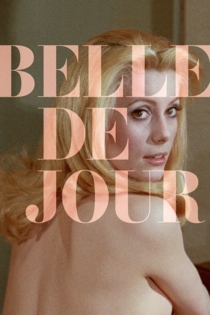
Belle de Jour
Luis Buñuel
Catherine Deneuve, Jean Sorel
Beautiful young housewife Séverine Serizy cannot reconcile her masochistic fantasies with her everyday life alongside dutiful husband Pierre. When her lovestruck friend Henri mentions a secretive high-class brothel run by Madame Anais, Séverine begins to work there during the day under the name Belle de Jour. But when one of her clients grows possessive, she must try to go back to her normal life.
Belle de Jour
The Nun
Jacques Rivette
Anna Karina, Liselotte Pulver
In eighteenth-century France, a girl is forced against her will to take vows as a nun. Three mothers superior treat her in radically different ways, ranging from maternal concern, to sadistic persecution, to lesbian desire.
The Nun
Las Hurdes
Luis Buñuel
Abel Jacquin, Francisco Rabal
An exploration —manipulated and staged— of life in Las Hurdes, in the province of Cáceres, in Extremadura, Spain, as it was in 1932. Insalubrity, misery and lack of opportunities provoke the emigration of young people and the solitude of those who remain in the desolation of one of the poorest and least developed Spanish regions at that time. (Silent short, voiced in 1937 and 1996.)
Land Without Bread