
Raquel Revuelta
1925 - 2004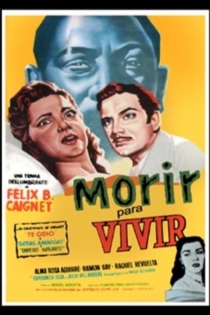
Lucia
Humberto Solás
Raquel Revuelta, Eslinda Núñez
In his award-winning film Lucía, Humberto Solás interpreted the theme of Cuba’s hundred years' struggle in an entirely novel way to create an epic in three separate episodes, each centred around a woman called Lucía and each unfolding in a different period of Cuban history, corresponding to the three stages of colonialism (1895), neocolonialism (1930) and socialist revolution (1968). The three episodes also present us with "Lucías" of different social classes. Solás described his film in this way: "The woman's role always lays bare the contradictions of a period and makes them explicit: Lucía is not a film about women, it's a film about society."
Lucia

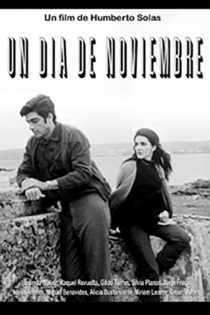
One Day in November
Humberto Solás
Eslinda Núñez, Gildo Torres
It is the story of a young man named Esteban, who was totally devoted to the cause of the Revolution against Fulgencio Batista. One day, Esteban is diagnosed with a cerebral aneurism, which causes him to take stock of his life as a revolutionary and to reconsider his relationships to his family--to his mother and brother, particularly--and his friends.
One Day in November
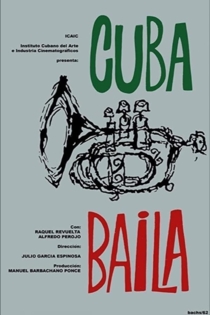
Cuba Baila
Julio García Espinosa
Tete Blanco, Vivian Gude
Featured in a musical environment possible light anywhere in the world, adapted to a Cuban city makes good use of music. The argument is based on the desires and efforts of middle-income families, to hold a quinceanera at a level greater than that permitted by the economic status of a family.
Cuba Dances
Cecilia
Humberto Solás
Daisy Granados, Imanol Arias
The story of Cecilia is a story of the society that dominated 19th-century Cuba, a society divided between whites, blacks, and those who were mixed, the mulattos. (Since the Spanish conquistadors killed off the Indian population in Cuba not long after they took over the island, there are no mestizos, or those of mixed-Indian blood in Cuba as in other Caribbean nations.) At any rate, the drama about the life and loves of Cecilia (Daisy Granados) takes place against the backdrop of graphically violent mistreatment of slaves and the rumors of a slave rebellion after the Cubans hear of slaves turning against their captors in Haiti.
Cecilia