Antoine Bonfanti
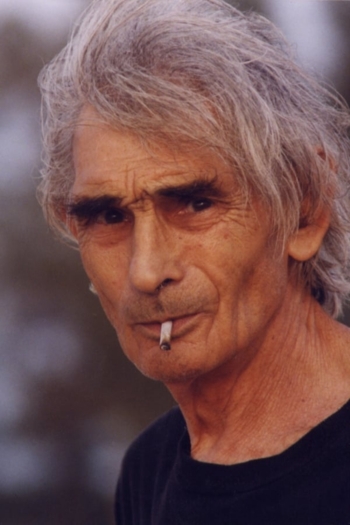
1923 - 2006He was born 26 October 1923 in Ajaccio, Corsica, and died 4 March 2006 in Montpellier, France.
He began learning his profession as a trainee boom-operator on the film La Belle et la Bête by Jean Cocteau. He is considered as being one of the pioneers of direct-sound in film-making on location: “the school of direct-sound is French - said the sound-engineer Jean-Pierre Ruh- it began with Antoine Bonfanti”.
He is characterised by his collaborations with directors as Bernardo Bertolucci, André Delvaux, Amos Gitaï, Jean Luc Godard, Joris Ivens, William Klein, Chris Marker, Gérard Oury, Alain Resnais, René Vautier, and Paul Vecchiali.
His primary occupation is the authenticity of sound: above all he likes building the whole universe of sound of one film, through every stage from filming to sound-mixing (that means the live-sounds, the ambiances in location and after the sound-effects, the dubbing and the mixing in auditorium). In this pattern, he had 120 films of which 80 feature films. Otherwise, his filmography includes about 420 titles of long and short Films of fiction or documentary; and within this number, some can be still missing because - as involved in cinema as in politics - Antoine did lots of "for free" that, may be, haven't been listed.
Member of the Résistance and, after, volunteer soldier in the war-years 1943-1945; militant, communist by spirit, vigilante, he is part of SLON collective - which later becomes ISKRA - and of the Medvedkine-groups.
He shared his sound-artist's talent and he has trained several generations of sound-engineers in many countries (Algeria, Angola, Argentina, Chile, Cuba, Morocco, Mozambique, Peru, Portugal, Tunisia, Venezuela), where to make of the cinema is a matter of fight.
The film "Antoine Bonfanti - Traces sonores d’une écoute engagée" by Suzanne Durand, reconstitutes a professional path of more than 50 years which demonstrate a commitment going far-beyond the simple trade and his collaboration with a lot of film-makers; it is also an original approach of the sound's practical.
He recounts it himself also, interviewed by Noël Simsolo in a transmission on France-Culture, called "Mémoire du siècle, Antoine Bonfanti" on 20 August 1997, and broadcast during "Les Nuits de France-Culture" at midnight of 25 January 2016.
Antoine, nicknamed "Nono" by his Corsican family, "Toni" by his war comrades, "Bonbon" within the world of cinema, was born in Ajaccio in 1923. The family leaves again for Africa in 1926, having already spent some years in Conakry in "République de Guinée", (formerly "Guinée française"). His father is "receveur principal des postes" in Bobo-Dioulasso in Burkina-Faso (formerly "Haute-Volta"). Antoine spends some of his youth there but, when his eldest brother must go to high-school, the family returns to Corsica, before his father be appointed "percepteur" (tax-collector) at Saint-Rambert d’Alban, and after at Touquet-Paris-Plage. ...
Source: Article "Antoine Bonfanti" from Wikipedia in English, licensed under CC-BY-SA 3.0.
Life Lesson
Boris Lehman
Loup Abramovici, Blanche Irène Albera
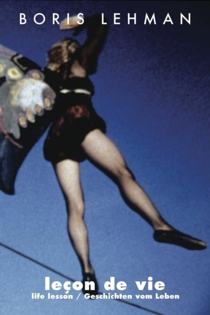
To attain knowledge, man and woman had to be willing to give up their innocence," says Boris Lehman. Life Lesson is a poetic and philosophic reflection on the theme of paradise lost. Some fifty persons illustrate the planet's convulsions and the world's vacillations. Trying to communicate, to commune with the invisible, they cry out, sing out, give out messages, each in their own way, in their own state of solitude. These are like multiple echoes that resemble waves in the water or stars in the sky. " Behind these images and sounds that have been stifled by today's society, Lehman hunts for noises, cries, songs, messages that go astray. He says that if we look at the invisible we may hear the words. He invites us to look beyond the appearances of social life and to vibrate in tune with life's polyphony that is all around us."
Life Lesson

La Charnière
Antoine Bonfanti
SOUND DOCUMENTARY On April 27, 1968, workers from the Rhodiaceta factory in Besançon gathered at the village hall of Palente-les-Orchamps to attend the screening of the film À bientôt j'espoir by Mario Marret and Chris Marker. This documentary sound reproduces the critical debate that follows. In June 1969, at the end of the Wrestling Class , Pol Cèbe, the head of the Cultural Center of Palente-les-Orchamps, brings to the sound document a conclusion in the form of a report. Echoing an intense debate after the screening of To Soon I Hope , the movie The Hinge of Medvedkine Groups captures very well those moments when workers express their dissatisfaction with the way they were portrayed.
La Charnière