
Abu Sayeed
2021
Wail of the Conch
Abu Sayeed
Nazma Anwar, Zahid Hasan
Osman returns to his ancestral village on a stormy night, the village he had fled in the dark of the night 27 years ago. He finds shelter in the home of Mannaf Khan, a village elder. Osman seeks to rediscover his childhood and goes about reliving the past in childhood memories. He meets Kunjo Buri who had nursed him as an infant. He also meets his boyhood friend Fazlu. Osman is not after worldly gains, he only wants to spend the rest of his life in the village and the nostalgia of bygone days. That, However, is not to be. He comes face to face with a reality of a markedly different kind.
Wail of the Conch

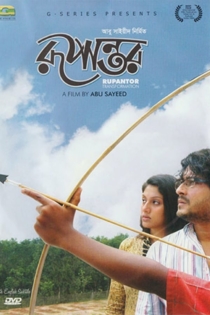
Transformation
Abu Sayeed
Ferdous Ahmed, Jayanto Chattopadhyay
While making a film based on the Mahabharata episode of Eklavya's offering of honorarium to his Guru Dronacharya, a film director discovers a new truth, which drives him to change and add something new to the screenplay.
Transformation
Nirontor
Abu Sayeed
Shabnur, Ilias Kanchon
The story unfolds around the struggle of Tithi, a young girl from a lower middle-class family in Bangladesh. Tithi becomes a call girl to support her family. Tithi’s brother gets married and surprisingly discovers that working can also give satisfaction. He opens up a business with the capital his sister made as a prostitute. Financially, things are getting better in the family but Tithi slowly becomes aloof and indifferent to everything. Even the touch of her own mother irritates her and makes her recall a man’s lust. She withdraws within herself and takes refuge in solitude.
Forever Flows
একজন কবির মৃত্যু
Abu Sayeed
Jayanto Chattopadhyay, Airin Sultana
There are no stars to be seen in the night sky over Dhaka city. Pollution blocks our conversations with the stars. Poet Abid Haider is a lover of nature and he is deeply hurt by this catastrophe. His ideal is an unpolluted atmosphere. He yearns to revel in the sight of night skies twinkling with stars. It is his birthright, also the birthright of the generations to come. This is what he believes. Firm in this belief, he refuses to give up his claim to Earth even after death. Because the poet thinks that the human footprint upon Earth, the fruit of all our efforts is deathless, flowing perennially. Death might terminate one branch of thought but it cannot obliterate human endeavor. The enterprise that is life continues.
Death of a Poet